• Media Review: The Gloucester History Festival

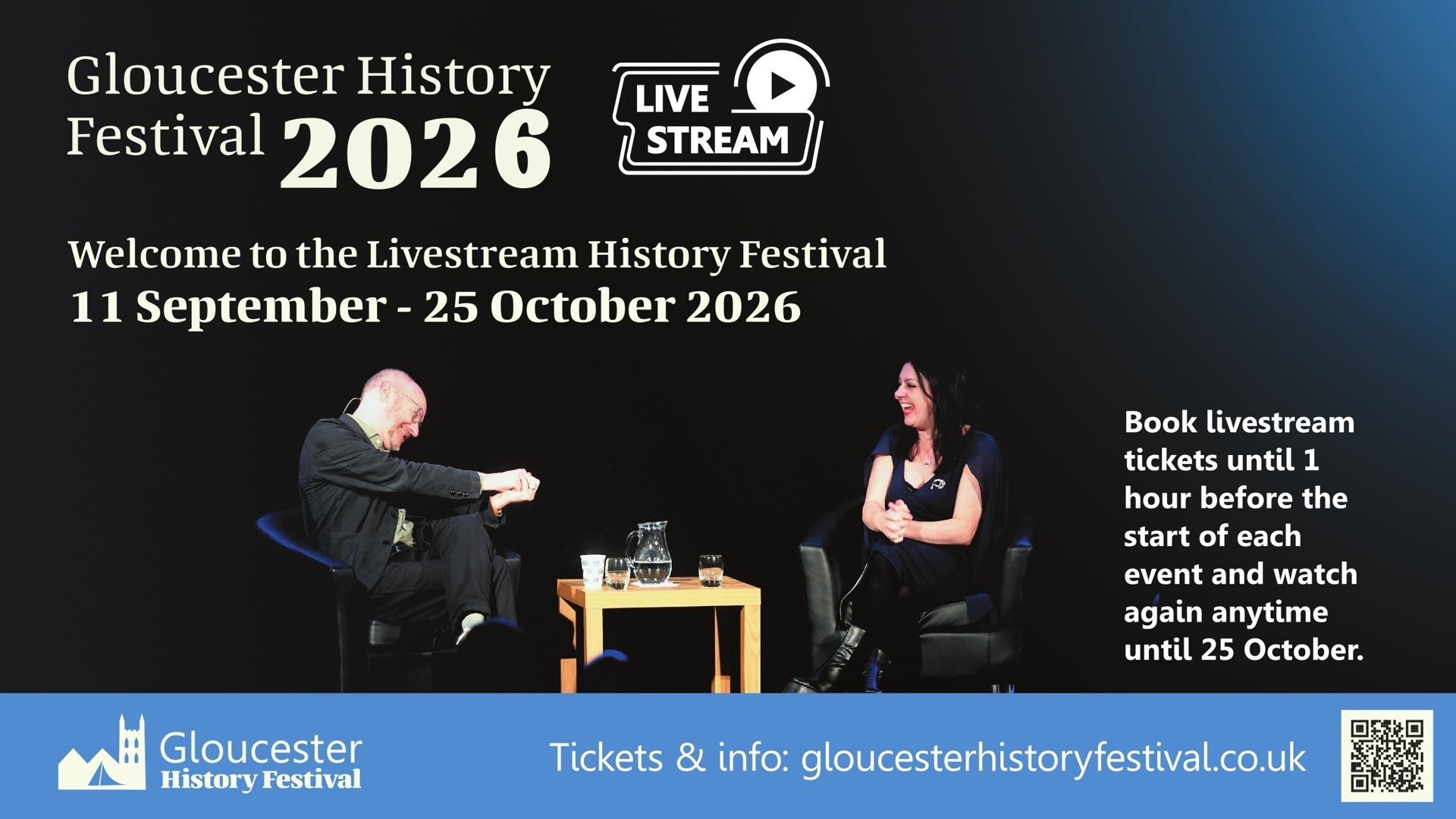
    I purchased a digital pass to the Gloucester History Festival, because I recognized a few names on the program. I was excited to hear from Nicola Tallis, Janina Ramirez, Nathen Amin, and Dan Jones. When I logged into the site, my pass gave me access to over 40 talks on all kinds of history. Topics included the pagan Britains, the Vikings, Ancient Greek literature, Chinese history, castles, World War II, and architectural history. The speakers offered lectures, interviews, and panel discussions.

    Accessibility & Experience

    The talks were available to stream online from Sep 11 through Oct 25. With a digital pass, I could stream them live and watch the recorded versions. The platform was easy to navigate and the sound quality was clear. Some historians used visuals during their lecture, which they described. Talks were down-to-earth and presenters took questions at the end.

    Of the 40+ talks I watched, here are my favorites.

    “Aethelstan: England’s First King” with Michael Wood

    I recognized Michael Wood from his documentary, The Story of England. In his talk, he laid out the structure of his forthcoming biography on Aethelstan. Wood emphasized the need to create a well-rounded psychological biography — even when working with few resources. His passion and expertise were evident: he described the nuanced way he used each source on Aethelstan’s early life. I especially appreciated his attention to Aethelstan’s psalter (an ornamented prayer book) to explore this medieval king’s most meaningful relationships.

    “No Friend to This House” with Natalie Haynes

    Natalie Haynes’ informal and engaging talk explored her latest novel, No Friend to This House, which retells the Jason and Medea story. A classicist and stand-up comedian, Haynes’ delivery is remarkable. She makes classical texts accessible without sacrificing accuracy or historical context. In this talk, she shared her teenage experience of live Greek theater — how the staging of each play enhances Medea’s story. After Haynes’ talk, I read her book Divine Might, which I reviewed here.

    “Mythica: The Women Behind The Odyssey” with Emily Hauser

    In this talk, Emily Hauser searched for the female voices of The Iliad and The Odyssey. She used Emily Wilson’s recent translations to describe the lives of women like Penelope, Briseis, Helen of Troy, and Andromache. Hauser tracked the literary silencing of these women and employed newly discovered household records to describe the daily lives of enslaved women. I don’t think anyone really likes Odysseus’s son Telemachus, but I definitely disliked him much more after Hauser’s talk. She highlighted how much women, often captured as war-troophies, actually shaped these epic stories.

    Final Thoughts

    Several speakers at Gloucester are authors, and I added many books to my reading list. I especially appreciated the ability to replay these detailed talks for weeks. I was thoroughly impressed with this experience, and I will participate in future streaming events.


  • Chasing Wonder: Fluency and Access for All Readers

    Chasing Wonder: Fluency and Access for All Readers

    Last week I attended another virtual Teaching That Succeeds event. Hosted by Holly, Elana, and Kata, this free session focused on the decoding threshold: the point when older students disengage from difficult readings. The mini conference offered two concurrent sessions; I chose Steve Chiger’s “Tier 1 Approaches for Helping Secondary Readers Access Complex Texts.”

    The Senior Director of 5-12 Humanities at Uncommon Schools, Chiger emphasized our responsibility to students — to chase the wonder of reading. We must make reading as available to our students as it is to us.

    Fluency and Access

    The Science of Reading prioritizes fluency, because it leads to increased comprehension. Chiger invited us to think of fluency as, “the text sounds like an audiobook in my head.” He urged us to include fluency practice in our classes even with older students. If a student struggles to recognize or pronounce words, they will have little brain power left to understand the text’s meaning. As texts grow in complexity, decoding takes more effort. Faced with a difficult text and no strategies for approaching it, students will find little joy in reading.

    Chiger showed a classroom demonstration that involved the teacher reading aloud, students reading aloud as a class, and students reading aloud with partners. In the demo, these three types of reading used the same paragraphs, because fluency needs to be rehearsed. Teachers can even pull a small group of struggling readers while the rest of the class is reading with a partner or reading on their own. In a smaller group, a teacher can provide specific instruction on pronunciation and syllable recognition — inviting students to annotate the parts of words they know and put the pieces of language together.

    We fail to prepare students for life after graduation if we only use texts that are easy to read and understand. Access to grade-level texts, and the fluency support he described, will help a student deal with complicated material in college and career. In the classroom, a teacher can invite students to make predictions about the text, ask questions about themes, and allow students to pause and respond to the text after reading brief passages. Teachers can also highlight a text’s unique elements, such as structural features, narrative patterns, or specific vocabulary. With these techniques, we are showing students the cognitive work that an adept reader is doing.

    Into the High School Classroom

    These practices can easily find a home in the high school classroom. No student is “too old” to benefit from direct and meaningful literacy protocols. Here are a few ways I apply these techniques with my students when we study Shakespeare’s plays.

    • I teach them how to pronounce words they may have never encountered ((aye, yea, doth, forsooth, etc).
    • I explain unique grammatical patterns of Early Modern English (Shakespeare’s English), such as the use of thee/thou/thy and the formation of verbs (doth, art, wilt, wouldst).
    • I explain peculiarities of Shakespeare’s spelling (heav’n = heaven, ne’er = never, o’er = over).
    • Students are given time in class to rehearse with a partner or get direct help from me before we perform the play as a class.

    Questions for Reflection

    Here are some questions you can ask yourself:

    • What are my strengths as a reader, and how can I share these with students?
    • What do I enjoy about reading, and how can I help students to feel this way?
    • What makes reading hard for me, and how can I assist students when they feel this difficulty?

    We all enjoy reading because we have achieved some level of confidence and mastery. We must target that moment when a frustrated student wants to walk away and give them the techniques to re-approach the text. These teaching practices acknowledge each student’s literacy challenges and help them find a way forward.

  • Tennyson and the Tenor

    Tennyson and the Tenor

    On Poetry and Music

    I am always searching for beautiful voices, and I’ve loved Ian Bostridge’s expressive tenor for many years. When I was in college, I heard him live in concert. Bostridge performs a setting of Tennyson’s “Now Sleeps the Crimson Petal,” and it is gorgeous. You will marvel at its serenity and depth:

    Most readers first experience Alfred, Lord Tennyson’s poetry through “Charge of the Light Brigade,” which I read in a freshman English class. As a high school senior, I studied “Ulysses” to prepare for the AP Literature exam. In fact I borrowed Tennyson’s final call for my speech at a black tie gala. My teacher would have applauded me in my apple-red gown telling donors that their efforts enabled me, “To strive, to seek, to find, and not to yield.”

    The Poem

    “Now Sleeps the Crimson Petal” is an excerpt from The Princess, an extended work of comic verse. While the long poem offers a quasi-medieval love story worthy of Gilbert and Sullivan, this excerpt is one of the songs Tennyson later inserted. Its tone is meditative and tender— at odds with the poem’s general subject.

    In setting the poem to music, Roger Quilter shortened its 14 lines, omitting three assertions in the middle. Perhaps because I first encountered this poem in its musical form, I actually prefer the abbreviated lyrics

    Now sleeps the crimson petal, now the white;

    Nor waves the cypress in the palace walk;

    Nor winks the gold fin in the porphyry font.

    The firefly wakens; waken thou with me.

    Now folds the lily all her sweetness up,

    And slips into the bosom of the lake.

    So fold thyself, my dearest, thou, and slip

    Into my bosom and be lost in me.

    While I am no enthusiast for Romantic poetry, I can appreciate the soothing pastoral images Tennyson creates here. Even the “thou” and “thy”—which are better suited to Shakespeare and John Donne—seem to fit the poem’s archaic fantasy landscape. The princess sings these lines, and their tenderness is breathtaking. I love the final lines of each verse: “The firefly wakens; waken thou with me” and “So fold thyself, my dearest, thou, and slip / Into my bosom and be lost in me.”

    The Performance

    This performance comes from Bostridge’s album, The English Songbook. Though Tennyson gives these lines to the poem’s female lead, the composer’s tenor setting loses nothing. Julius Drake’s delicate piano accompaniment emphasizes the lyrical tenderness.

    This melody moves in small steps and arpeggio patterns, using upward leaps to highlight the princess’s gentle requests. “Waken thou” and “be lost” both move in upward fourths, giving the higher note a pleading quality.

    Bostridge sings this excerpt from The Princess like a lullaby. His tenor voice has a rich caramel timbre. The first stanza ends with “me” on the first note of the key, which brings us musically home. But even as the tone softens and the volume lowers in the second stanza, the final “me” of “be lost in me” ends on the fifth note of the scale. Though this move provides musical resolution, it does not feel as “at home” as the first stanza, which underscores the longing of the final line.

    More from Ian Bostridge

    If you liked the excerpt from The Princess, you’ll love this performance of Yeats’ poem, “The Cloths of Heaven”:

    Bostridge’s repertoire is extensive and capable. I appreciate the perspective Bostridge brings to Handel. His performance and commentary in this album preview are delightful:

    And here’s something sprightly and dramatic in German from Schumann’s Liederkreis:

  • Tudorcon: Last Day to Join the Privy Council

    Tudorcon 2026 is one month away, and you can still attend with a digital pass. Tudorcon from Home is a fully immersive experience where you can stream the talks, ask questions, and have fun in the chat. Here’s a preview of my talk:

    The conference will feature 16 speakers and a wide range of topics — including Elizabethan fashion, the Spanish inquisition, Henry VIII’s mental illness, and Bess of Hardwick’s success. Here is the full playlist of previews.

    What is the Privy Council?

    For Tudorcon from home attendees, today is the last day to get added to the Privy Council! The Privy Council is the early-bird group for TudorCon From Home. Anyone who buys a ticket before September 30 gets folded into the community early, and they get:

    • An extra Privy Council game night before the conference weekend
    • A Spooky Halloween Walk through London, an immersive audio tour
    • Tudor Zoom backgrounds and phone/computer wallpapers
    • A Privy Council badge in the TudorCon app
    • Extra warm-up content through October
    • Early access to the community chat

    On top of that, every From Home ticket comes with lifetime replays and a Digital Swag Bag worth over $100.

    Get your ticket today!

    Our host Heather has given each speaker an affiliate link so we can earn commission on any virtual or in-person ticket purchased for the conference. I actually receive 50% commission from tickets purchased through my link. If you want to attend, please use my link for Tudorcon from Home. Use code PRIVYCOUNCIL for a discount.

    Come join the Court!

  • Book Review: DIVINE MIGHT by Natalie Haynes

    As I listen to the Gloucester History Festival talks online, I’ve added so many books to my reading list. While I initially prioritized the talks on medieval Europe, Vikings, and Anglo-Saxons, I have enjoyed the talks on Classical texts from Ancient Greece by Emily Hauser and Natalie Haynes. Emily Hauser’s work is new to me, but I’ve read Natalie Haynes before. A classicist and stand-up comedian, Haynes is knowledgeable and delightfully irreverent. I loved her book Pandora’s Jar: Women in the Greek Myths, and her podcast episode on women poets in Ancient Greece. At the festival, Haynes discussed her latest novel No Friend to This House, a retelling of the Jason and Medea myth.

    Now I’ll confess that I do not have a linear or thorough education in the ancient classics. I’ve read excerpts from Ovid and Homer and a few Roman allegories, but I never took a classics course. So I’ve added Emily Wilson’s translations of The Iliad and The Odyssey and Emily Hauser’s Penelope’s Bones to my Audible library.

    I started my classical syllabus with Natalie Haynes’ Divine Might: Goddesses in Greek Myth (Harper Perennial, 2024). Where Pandora’s Jar tracks the mythological, cultural, and historical significance of notable Greek women, Divine Might studies prominent Olympian goddesses. Haynes includes the Muses, Hera, Aphrodite, Artemis, Demeter, Hestia, Athene, and the Furies. Here is the book trailer:

    Three-Dimensional Myths

    In this book, Haynes synthesizes primary sources and contemporary adaptations, rendering each goddess in vibrant detail. She cites Homer, Hesiod, Ovid, and Sappho, as well as Renaissance artists and twentieth-century filmmakers. She explains how we can see the goddesses — translated with varying levels of success — in modern films. The Muses appear in Xanadu, and Hera’s archetype resonates in Fawlty Towers, albeit commercially reduced. Haynes attends to each goddess’s iconography, even describing the two expensive Barbies that show Athene as goddess of wisdom and goddess of war.

    Haynes offers a comparative study of each goddess’s origin story, skills, personality, and devotees. The treatment of each goddess is contextualized based on their location. In her discussion of Artemis, she explains that worshippers in Greece were praying at cross-purposes with the “barbarian” worshipers in other lands. Even sacrificial offerings varied widely depending on region. The Olympians often switched sides, crossed battle lines, or dissolved alliances.

    Moved by the Muses

    I especially appreciated Haynes’ perspective on the Muses, Hera, and Demeter. Haynes explains how the Muses exhibit a pastoral beauty — their feet never roughened by their constant dancing. But their pleasing appearance belies a fierce pride in their skills. Haynes recounts the mortals foolish enough to challenge the Muses to artistic contests. When (not if) you lose a musical contest with the Muses, they may take your talent, genius, or sight — and they may turn you and your eight sisters into magpies.

    Haynes provides insight into Hera’s personality and behavior while accurately detailing this Olympian queen’s spite, deceit, and creative revenge. Though Zeus’s infidelities are well-known, Haynes explains that he has actually been married several times before. Like ancient Greek women, Even Hera, Queen of the Gods, is subject to her husband’s verbal and physical abuse. And she can be replaced. Haynes builds sympathy for Hera when describing how Hera favors certain heroes and tries to protect married women.

    Haynes’ treatment of Demeter is also intense and powerful. She removes any romanticism from the story of Hades’ kidnapping of Persephone and emphasizes Demeter’s profound grief at the loss of her daughter. Haynes praises Demeter’s courage, anger, and resourcefulness which finally lead the Olympians to return Persephone to her mother for a time.

    Final Impressions

    ⭐ ⭐ ⭐ ⭐ ⭐

    Greek myths can be confusing and troubling. The gods enact harsh judgments, the women are treated badly, and the mortals face impossible choices. But Haynes understands why these narratives still compel us. She moves with empathy and care through each chapter, delivering a thorough and human examination of the mythological tradition. This is a wonderfully engaging book — rigorous in its sources and lively in its voice.

    Enhance Your Knowledge

    Natalie Haynes discusses Divine Might on the Classical Wisdom podcast:

    Natalie Haynes analyzes Medusa and the function of monsters in Bronze Age myth:

  • Refining Gold: City of Ladies Reflection #1

    In an earlier blog post, I mentioned that I’ve begun a slow read of Christine de Pizan’s The Book of the City of Ladies. Though I possess a Christine de Pizan coffee mug, and her work is often referenced in books on medieval history, I’ve never read this text. I’m using the Audible version of Rosalind Brown-Grant’s translation. I’ll cite my references using section numbers rather than page numbers in case you’re reading a different edition. This first reflection covers Part 1, Sections 1-10.

    Welcome, dear readers, to my journey into the City of Ladies!

    Christine’s Genre and Background

    As a 14th-century writer, Christine is situated in a long tradition of religious and allegorical dialogue. She writes from her Christian perspective, relying on Biblical stories familiar to her readers. In City of Ladies, she imagines a conversation with three divine visitors who will illuminate her thoughts and her culture’s ideas about women. “Crowned and of majestic appearance,” these figures are Lady Reason, Lady Rectitude, and Lady Justice (1.2). Like others in this genre, Christine casts herself as a humble scholar who needs to be taught.

    Christine begins in her study, searching for something to read. She finds a book that offers familiar criticism of women and meditates on her unworthiness. She wonders why God, a source of goodness, would intentionally design women as flawed beings. She deplores her lack of understanding. But Lady Reason says, “Return to your senses,” and invites Chrisstine to reconsider the tradition of denigrating women (1.2).

    In this text, Christine and her instructors often speak of “virtuous” and “noble” women. While these words may sound trite to our ears, it is important to acknowledge their magnitude in a medieval or Renaissance context. Many medieval writers used a woman’s physical body to measure her virtue: beautiful women were assumed to be mild, chaste, and obedient. But Christine and her three guests are speaking of a spiritual integrity that renders a woman “noble.” While male writers praised golden hair and soft eyes, Christine is looking for a woman’s piety, meekness, and largeness of heart.

    An Affectionate Mentorship

    The three ladies address Christine as “my dear daughter” and “my dear girl” as they urge her to analyze the criticisms leveled at women. By building the City of Ladies and filling it with women of virtue, they will dethrone the illogical judgments of women as weak, immoral, and frivolous. Lady Reason affirms, “Those who speak ill of women do more harm to themselves than they do to the women they actually slander” (1.2). The three guests will help Christine build the City of Ladies, a “sturdy and impregnable” refuge for women (1.3). While Lady Reason does most of the talking, each virtuous instructor has a unique part to play.

    Using her mirror, Lady Reason shows people the truth in themselves. She will help Christine lay the foundation for the City. With her yardstick, Lady Rectitude accurately measures the rightness of people’s actions. She will help Christine map the inner buildings of the City. And Lady Justice uses her golden vessel to dole out the appropriate rewards for people’s virtuous behavior. She will construct the golden tops of the City’s high towers and fill the City with noble women. She will also bring the City a virtuous queen.

    Returning Christine to Her Senses

    The work begins with excavation. Lady Reason calls Christine to use the “spade of your intelligence” to turn over the soil so the City’s foundations can be established (1.8). This task involves examining why men criticize women and whether these judgements are valid. When introducing the project, Lady Reason asks, “Have you forgotten that it is in the furnace that gold is refined?” (1.2). Together she and Christine discover that men criticize women out of spite, envy, arrogance, and misguided good intentions.

    The “gold” of their discussion exists in these last three sections. Christine cites historical figures like Ovid and Cicero, and Lady Reason refutes their criticisms. She reveals that men despise women when they can no longer enjoy them or when they want to show off. Even well-intentioned men err when criticizing all women for the foolish actions of a few.

    Christine asks whether women’s bodies are weak or defective as she has read, and Lady Reason tells her to recall personal experience. She says this beautiful line: “If the divine craftsman himself wasn’t ashamed to create the female form, why should nature be?” (1.9). To be made in God’s image, she assures Christine, is a spiritual quality, not a physical one.

    Final Thoughts

    As Lady Reason helps Christine clear away misconceptions about women, their dialogue is fairminded, logical, and kind. They both praise the “gentleness” in women, which is a quality we can admire in any gender. Lady Reason says that building the City will help Christine overcome any doubts about her self-worth, but the City will also shine forth for women of the future who have endured centuries of criticism. This is a valuable endeavor, and I am excited to read on!

  • An Elephant and Three Blind Poets

    A few weeks ago, Joseph Bottum’s Poems Ancient and Modern substack shared John Saxe’s “The Blind Man and the Elephant.” This 19th-century comic verse describes six blind men trying to understand an elephant by touch. The poem reaches what Bottum calls an “obvious” conclusion — that none of them can be completely right because of their common impairment. The story is not new; Saxe retells a parable used to illustrate the limits of human perception. As is often the case, the poem reiterates that limitation as blindness.

    While this poem is metrically capable, Saxe offers a tiresome analogy. Once again, blindness is marketed as a stunted knowing, a partial view of a (sighted) reality. If we cast the six blind men as speakers of another language or ambassadors from another culture, we might more clearly understand the harm that occurs when we employ disability as shorthand for ineptitude.

    Though the poem is old and a little silly, its idea still reverberates today. I could give you a list of examples, but I’ll offer two.

    When I published my first book of poems, a reporter couldn’t understand how I was able to use color and imagery as a blind poet. He reached out to my former professor to check whether my visual details were valid. When the professor defended me, the reporter interviewed me. His headline (which may have been the creation of an editor) read, “Blind poet at UNF writes about far more than her lack of sight.” That headline is newsworthy only if we cling to the sad idea that disabled people know disability and nothing else.

    I am a blind teacher with a Master’s degree, four certifications, and fourteen years of experience. But at a recent job interview, the employer asked whether I would be able to walk around the building. She stressed this skill as an important part of the job. My work history shows that I have traveled on four different campuses, yet she could not imagine — or did not bother to imagine — how I managed this daily aspect of professional life.

    These experiences occurred in the 21st century. Old attitudes about disability will prevail as long as we allow them to prevail. So let’s study the poem’s parable as an archaism and not a contemporary truth.

    Poetry can offer the authentic truth of living with blindness — its delights and frustrations. Here are three poems that show the kind of knowing a blind poet brings to the page.

    “A DeafBlind Poet” by John Lee Clark

    A Deaf Blind poet doesn’t like to read sitting up. A Deaf Blind poet likes to read Braille magazines on the john. A Deaf Blind poet is in the habit of composing nineteenth-century letters and pressing Alt+S. A Deaf Blind poet is a terrible student. A Deaf Blind poet does a lot of groundbreaking research. A Deaf Blind poet is always in demand. A Deaf Blind poet has yet to be gainfully employed. A Deaf Blind poet shares all his trade secrets with his children. A Deaf Blind poet will not stop if police order him to. A Deaf Blind poet used to like dogs but now prefers cats. A Deaf Blind poet listens to his wife. A Deaf Blind poet knits soft things for his dear friends. A Deaf Blind poet doesn’t believe in “contributing to society.”

    “Democracy” by Dan Simpson

    “Look at those eyes,” she warbles,

    as I settle myself and my guide

    across from her on the bus.

    “What kind of dog is that?”

    I am about to answer

    when a man farther back clears his throat

    and says, “Yellow Labrador.”

    If he’s going to speak for me,

    At least he knows his breeds.

    But he knows more than that–

    He knows their innermost lives.

    He says, “Saddest dogs in the world.”

    I wouldn’t presume to know that,

    but we live in a free country;

    people can think what they want.

    “It takes six years to train them.”

    He sounds like he enjoys

    having tidbits of knowledge to share.

    There’s only one problem; he’s wrong:

    It’s actually more like six months.

    Fortunately for him,

    we live in a democracy,

    where opinion is equal to fact,

    and we all have the right to vote.

    “Blindness Locked Me Out” by Emily K. Michael

    The speed reading class for seventh graders

    slumped over tight columns of text spread flat

    on tables in the library where in her half-glasses

    the kind mistress of mundane rentals said:

    Just do your best. I don’t expect a miracle.

    The Friday dance nights for five dollars

    where antsy teens shuffled in a circle & the boys

    used too much drugstore cologne & the girls

    flaunted noisy earrings & strappy shoes.

    i took a place in the circle, left my white

    cane on the sidelines, tucked in my purse.

    the teambuilding antics at orientation

    teaching trust by tumbling back against a net

    of classmate arms outstretched to catch

    us — but how should I fall? I don’t judge distances

    & can’t scale the high tower where others are

    fighting their fears & learning to fail.

    Questions for Reflection:

    Tell me what you think.

    • How do these poets reveal the experience of blindness?
    • What do these poets know? What do they feel?
    • How can you relate to their experiences?
  • Book Review: QUEENS AND KINGS by Lucy Worsley

    ⭐ ⭐ ⭐ ⭐ ⭐

    Dr. Lucy Worsley is one of my favorite author-historians, and I’ve been anticipating her book Queens and Kings: An Unusually Personal History of the Monarchy since she announced it on social media. I enjoyed her previous books on Georgian history: Jane Austen at Home and The Courtiers. She was Chief Curator for Historic Royal Palaces and is now an ambassador for the charity and a historian-at-large.

    On Substack Lucy writes My Life in the Past. One of her best pieces is a tribute to Queen Caroline, her favorite queen. Lucy shared stories from Queens and Kings in a fun Q&A with historian Anthony Delaney:

    Divided into six parts, Lucy’s book chronicles the British monarchy. I was especially interested in the Tudor and Regency lives, but the Victorian and 20th-century sections were diverting as well. Lucy portrays most figures with sympathetic balance. I appreciated her attention to Queen Alexandra, consort to Edward VII. And her inclusion of various Romanov family members was fascinating.

    The Curator’s Touch

    I wasn’t sure what new angle Lucy would bring to these historical topics. I’ve read Gaareth Russell’s The Palace and Tracy Borman’s Crown & Sceptre — and both were engaging and well-researched. Even though I love Lucy’s work, I worried whether the topic had been done to death.

    But Lucy’s approach is intimate: she explains the objects and architecture of the palaces with clarity and precision. She takes readers deep into the world of the curator’s daily task — from discovering Tudor pee in a chamber pot to describing how the palace bricks have changed in color. She analyzes rooms, portraits, artifacts, and clothing, as well as providing stories of the many men and women who lived at Court. The work is delightfully situated in her perspective: we hear her steps and jingling keys, follow her hands along the walls. It is a beautiful testament to her decades of work as Chief Curator.

    A Surprise for Disability Scholars

    In her section on the Tudors, Lucy tracks the physical decline of Henry VIII in later life. Henry sustained injuries from jousting that affected his ability to walk and exercise, so he gradually lost mobility. He walked with a cane, but he was also wheeled around his palaces in a special sedan chair. He was carried up the stairs in a kind of 16th-century lift device.

    I’m familiar with Henry’s health history and limitations, but I did not expect Lucy to use this topic to remark on the social model of disability. I was surprised and delighted to find that she discussed the question, “Was Henry VIII disabled?” with a balanced and accurate knowledge of disability studies. It’s rare to find these discussions in mainstream books, so I was excited to read this passage.

    Final Impressions

    From her touching dedication to her hopeful signoff, Lucy has created a humane work of intellectual rigor and thoughtful narrative. Lucy narrated the audiobook, and her voice is smooth, pleasant, and skilled. She possesses a low-pitched voice that is quite expressive. I can hear the smile in certain passages and longing in others. When she says goodbye to her career as Chief Curator, her voice is filled with warmth and a touch of sadness.

    Enhance Your Knowledge:

    Here’s my favorite documentary about Hampton Court Palace, featuring Tracy Borman, Lucy Worsley, and Suzannah Lipscomb:

    Lucy Worsley and David Starkey celebrate Hampton Court’s 500th anniversary by recreating Edward VI’s christening:

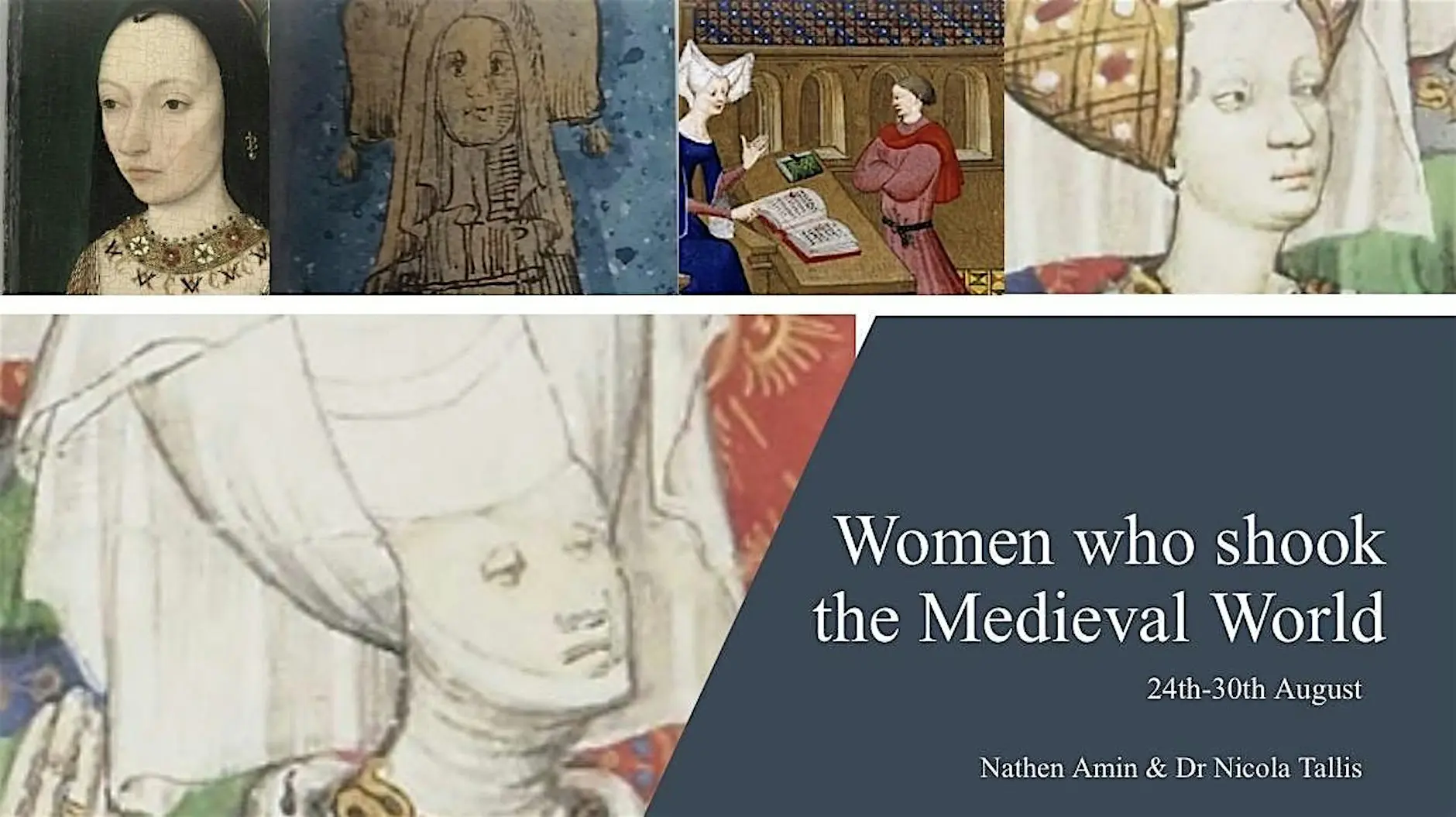
  • Course Review: Women Who Shook the Medieval World

    ⭐ ⭐ ⭐ ⭐ ⭐

    I’m thrilled to review another virtual course on medieval women! This is my third course with Nathen Amin and Dr. Nicola Tallis, and each course has been a delight. I’ve taken The Tudors: The Creation of a Dynasty and Wars of the Roses: Power and Personalities. Nathen and Nicola are a personable and well-informed team, and I often laugh out loud while listening to their recorded lectures. Their warmth is contagious.

    About Nathen Amin and Dr. Nicola Tallis

    A fellow of the Royal Historical Society, Nathen Amin is the author of The House of Beaufort and Son of Prophecy. His historical expertise includes medieval history and the early Tudors. He runs the Hiraeth newsletter on Substack. I especially love Nathen’s piece on public speaking. He is the keynote speaker for Tudorcon 2026!

    Dr. Nicola Tallis is the author of several books, including All the Queen’s Jewels, Crown of Blood, Uncrowned Queen, and Young Elizabeth. She runs History that Sparkles on Substack. Her areas of specialization include the 15th and 16th centuries and the history of jewelry. Nicola collaborated with HistoryExtra for a recent series on Queen Elizabeth I.

    About the Course

    Here is the course description:

    Uncover the stories of the extraordinary women who made their voices heard in the medieval world.

    Join Nathen Amin and Nicola Tallis between 24th-30th August for an epic deep dive into the lives of some of the extraordinary medieval women who navigated their own paths in a male dominated world.

    As we uncover the stories of Katherine Swynford, Joan Beaufort, Cecily Neville and more, we’ll be learning about the impact these women had on their contemporaries, families and the medieval world in which they lived.

    Whether you’re a history buff or have an interest in one of these medieval women, this is the course you won’t want to miss! Join us on our journey to explore the lives of the medieval women who shook the medieval world.

    Quality, Delivery & Accessibility

    Both Nathen and Nicola are polished and engaging presenters. Though their lectures occasionally include visuals (which are not described), these historians are most often speaking directly to the viewer. We see their faces — and their pets. While Nathen and Nicola frequently mention writing their talks, their delivery seems natural and easygoing. Nathen and Nicola opened the series with an informal discussion.

    As with their previous courses, these lectures proceeded with each historian covering a unique topic. Nicola handled Katherine Swynford, the Paston women, and Cecily Neville while Nathen covered Joan Beaufort and Margaret of York. They concluded the pre-reccorded elements with a discussion and then we all participated in a Zoom Q&A.

    Every lecture was compelling, but my favorites were Nicola’s lecture on Katherine Swynford and Nathen’s talk on Margaret of York. Each talk addressed the detailed historical context and nuances of these medieval lives with primary sources. I appreciated their inclusion of the Paston women, whose ample store of letters provides a glimpse into everyday medieval life. Nathen and Nicola were also generous with the live Q&A, spending 90 minutes addressing all of our questions — and debating whose pet behaved more appropriately throughout the session. They are such a fun team! And they gave me lots of recommended reading.

    Up Next on My History Syllabus

    Here are the historical events I’m looking forward to:

    More to Explore

    Natalie Grueninger and Nicola Tallis discuss All the Queen’s Jewels on Talking Tudors:

    Natalie Grueninger and Nathen Amin discuss Son of Prophecy on Talking Tudors:

  • A Taste of Tudorcon

    On Saturday I was part of A Taste of Tudorcon: eight speakers from Tudorcon 2026 presented a preview of their talks. It was a live event on YouTube with a fun chat option where we could talk with viewers. Here’s my video:

    The previews include a wide range of topics — Elizabethan fashion, the Spanish inquisition, Henry VIII’s mental illness, and Bess of Hardwick’s success. Here is the full playlist.

    Have these presentations piqued your interest?

    Our host Heather has given each speaker an affiliate link so we can earn commission on any virtual or in-person ticket purchased for the conference. If you want to attend, please use my links for Tudorcon (in person) and Tudorcon from Home.

  • The Urgent Pull of Poetry: Christine de Pizan & Langston Hughes

    I’ve decided to study Christine de Pizan’s The Book of the City of Ladies. I’m participating in an online close read of this medieval text that will span the next 11 months. Christine de Pizan (1364-1430) received an exceptional education and published her own books, dedicating her work to royalty. She was widely read during and beyond her lifetime. I’ll be sharing my notes as I read City of Ladies here.

    For now, I want to look at a poem Pizan wrote for her son. This poem was translated from Middle French by Frank Beck:

    I have no great fortune, my son,

    To make you rich. In place of one,

    here are the lessons I have learned–

    the finest things I’ve ever earned.

    Before the world has borne you far,

    try to know people as they are.

    Knowing that will help you take

    the path that keeps you from mistakes.

    Pity anyone who is poor

    and stands in rags outside your door.

    Help them when you hear them cry!

    Remember that you too will die.

    Love those who have love for you,

    and keep your enemy in view:

    of allies none can have too many;

    small enemies there are not any.

    Never lose what the Good Lord gave

    to this, our world, too much enslaved.

    The foolish rush to end their lives;

    only the steadfast soul survives.

    As I read Christine’s words, I recalled Langston Hughes’ “Mother to Son”:

    Well, son, I’ll tell you:

    Life for me ain’t been no crystal stair.

    It’s had tacks in it,

    And splinters,

    And boards torn up,

    And places with no carpet on the floor—

    Bare.

    But all the time

    I’se been a-climbin’ on,

    And reachin’ landin’s,

    And turnin’ corners,

    And sometimes goin’ in the dark

    Where there ain’t been no light.

    So boy, don’t you turn back.

    Don’t you set down on the steps

    ’Cause you finds it’s kinder hard.

    Don’t you fall now—

    For I’se still goin’, honey,

    I’se still climbin’,

    And life for me ain’t been no crystal stair.

    Listen to Hughes’ poem here:

    What can Christine de Pizan, a Renaissance writer, say to Lnagston Hughes (1901-1967), a poet of the Harlem Renaissance? These mothers across centuries offer their sons candid life advice. Not just “do your best” but “ do your best because life will get hard.” Pizan tells her son that there are no “small enemies,” and reminds him that he, too, will die. Widowed at age 25, Pizan still had young children and extended family to support. Living in the perilous 14th century, she knew death and hardship. Even without a biography, we can understand that Hughes’ mother’s life had “tacks and splinters” in it. Crystal stairs existed but not for women of color in 20th-century America. The boards are “torn up…bare” and she continues to climb, turning corners in the dark.

    Hundreds of years part these poems, but their writers echo the same urgency — and it’s advice we all need. Pizan reminds her son that “only the steadfast soul survives.” Hughes’ mother advises, “Don’t you fall now— / For I’se still goin’, honey,” In societies that can easily brutalize their boys, these mothers call for courage, kindness and light.

  • Tudorcon, Tudor Scroll, and More!

    Get excited! I’m presenting virtually at Tudorcon 2026 in October! At Tudorcon 2025, I spoke about poetry in the Tudor Court:

    What is Tudorcon?

    Tudorcon is a conference about Renaissance history and culture. Its founder, Heather Teysko, runs The Renaissance English History Podcast, which is a fabulous resource for history lovers. Tudorcon takes place in Virginia, and this year it includes two venues: Agecroft Hall and Randolph-Macon College. Last year, my favorite talks were on Renaissance jewelry, the Jamestown brides, and Henry VIII’s psychological issues. I also enjoyed the virtual lute concert and Elizabethan court dance demonstrations.

    I’ll be attending Tuddorcon from Home like I did last year. This is the fabulous virtual version of Tudorcon, which is the gold standard for virtual conferences. We tune in to all the talks and even enter our questions into a special Google form. Heather’s husband Jonathan moderates the chat and ensures that we get our questions answered.

    This year, our amazing host Heather Teysko is giving everyone a free preview of Tudorcon 2026. In this “Taste of Tudorcon,” you can watch as eight speakers deliver a snippet of their talks…and I’m on the lineup!

    A Taste of Tudorcon will be available Saturday August 29. Heather will go live on her YouTube channel at 3PM Eastern to answer questions.

    Check out the video previews here.

    Want to attend Tudoorcon in October?

    Heather has given each speaker an affiliate link so we can earn commission on any virtual or in-person ticket purchased for the conference. If you want to attend, please use my links for Tudorcon (in person) and Tudorcon from Home

    My Medieval Renaissance on Tudor Scroll

    For all you history lovers, I’ve collected all my posts on medieval and renaissance content into a new series: My Medieval Renaissance. You can read them on the blog or visit the dedicated tab at the top of the page.

    Can’t wait for Tudorcon? Check out the new Tudor Scroll app! Heather Teysko has collected content from medieval and renaissance historians and synced it all in one fabulous app — podcasts, videos, games, blogs, reviews, discussion boards, and more!

    And My Medieval Renaissance is featured among the Tudor Scroll creators! Get the app in the Google Play Store or the Apple App Store.

  • Why the Best Teachers Are Actually Conductors

    In his TED presentation, Jacob Collier conducts an orchestra through a song they don’t know and haven’t rehearsed. He builds each part systematically, telling the musicians the notes and techniques to use. Collier revises and affirms as the sections come together. He teaches a few lines, allows the orchestra to play, then moves on. It’s a remarkable process.

    Collier’s demonstration confirms that music-making is magic. Every member’s investment builds a community of purpose. Each musician possesses a unique skill that the performance needs. The conductor unifies the ensemble in pursuit of a vision, and the ensemble creates the reality.

    “Conducting” Your Classroom: 4 Moves from Collier

    Collier’s demonstration offers practical lessons for teachers that will improve every class.

    • Teach with a vision or purpose.
      Imagine a future beyond what your students can see at any given moment. Teach with a drive and purpose that will guide the class, especially on days when students are uncooperative, tired, or discouraged. There will be times when the class shares and understands your vision, and times when they help you construct it.

      There will also be days when your students can’t fathom what they are working toward. You must hold in your mind the purpose for your position: enter class daily with that vision intact.
    • Understand the elements of your curriculum.
      Collier knew what the notes would sound like before he spoke them aloud. He used discipline-specific vocabulary (arco, glissando) with ease. He and the orchestra shared the common language of proficient musicians.

      Own the language of your subject. Resist the urge to use only what the curriculum prescribes. Deploy expert language in your classroom. Offer your students the insider knowledge of scholars, whether it’s scientific terminology or Shakespeare studies.

      You may be thinking, “Don’t all teachers know their subject matter?” No, they don’t. I’ve heard teachers say, “I don’t teach poetry” or “I let other teachers handle Shakespeare.” None of us will master every aspect of our discipline with genius, but don’t let a colleague’s knowledge outshine yours because you refuse to improve. If you expect your students to learn, you need to learn, too.
    • Empower the players.
      Give students the tools they need, and stand back! Let them come to the board, let them teach their peers. Your job is to bring the knowledge, and get out of their way.

      A strong orchestra depends on individual members as well as unified sections. Education is not a solitary pursuit. Let students work in a variety of configurations to build their confidence and skills. Arrange your classroom so that students can sit in pairs, small groups, and large groups. Invite students to work with classmates that they may not choose on their own.
    • Welcome the unique and diverse skills of every student.
      Knowing the musical range and potential of each instrument, Collier builds the performance to maximize the musician’s skills. We need to recognize that our students bring diverse abilities and interests into the classroom. Wherever possible, teachers should embrace these skill sets — whethehr it’s creating a new class job, allowing a student to pursue a special interest, or inviting students to design class assignments.

      The beauty of music depends on many different sounds created by instruments that require specialized technique. What can the harpist teach the trombone player? What can the winds and the brass learn from each other about breath? By validating each student’s right to learn and dynamic intelligence, you will demonstrate the value of acceptance in your classroom.

    Activities Inspired by Another Conductor

    Benjamin Zander delivered a talk for teachers that expressed some of these ideas:

    Like Collier, Zander emphasizes the conductor’s role as facilitator, letting players (students) shine. Zander recognizes the threat of self-doubt and the power of encouragement. Here are some ways you can apply his advice in your classroom:

    • Invite your students to write Zander’s “A Letter” using course materials. They will articulate their goals, strengths, and challenges in an affirming style. This reflection can guide how you collaborate throughout the term.
    • Organize your students by traits other than academic achievement. Randomize your class groups or group students by interests. This method will help them see that academic achievement is not the only measure of quality in a class.
    • Find a reason to laugh, especially at your own mistakes. Model this resilience for students so that they are not discouraged by failure.
    • Recognize that you never know a student’s complete story. If they seem indifferent or uninspired in your class, these feelings may have nothing to do with you. They have come to you with an educational history, and it takes time to build trust and enthusiasm. I have watched students bloom after two weeks in my classroom, and I’ve seen others take three years. Time and kindness usually work, but the pace is theirs, not yours.

    I hope this post has inspired you to recognize the limitless gifts students can show when working together for a common purpose. You are the standard-bearer of community in your classroom. Your welcoming spirit is contagious. And once you light the spark of collaboration, students will keep it going.

  • Where Do We Thrive? A Teacher’s Theory

    Where Do We Thrive? A Teacher’s Theory

    We often think about disabilities in isolation — as if someone won’t share limitations with a person possessing a different diagnosis. But the most interesting thinking comes from putting different ways of living in conversation. These discussions unearth common ground and help us build a more inclusive world. Conversation propels imagination, and imagination builds solutions.

    This morning, I was inspired by Dr. Zonya Mitchell’s post, Your Autistic Anxiety May Be a Sensory Processing Problem. Dr. Mitchell, The Autism Doctor, shares strategies to help autistic adults “heal burnout…and reclaim joy.” Dr. Mitchell’s post explains how sensory overwhelm and fatigue contribute to anxiety. She includes how long-term exposure to sounds, sights, textures, or smells can create profound exhaustion. Most importantly, she articulates how these sensations cannot be ignored; someone can’t “tough it out” when their nervous system is wired for different sensory experiences.

    “Aren’t Your Senses Heightened?”: What I Experience

    Though we often discuss these sensory challenges in the context of autism, they are not unique to individuals with autism. As a blind woman, I regularly experience sensory differences, overwhelm, and anxiety. I cannot handle prolonged bright light, loud environments, or multiple auditory channels.

    Light sensitivity is one of my most prevalent difficulties. When I’m out in public, I live behind my sunglasses — whether I’m standing outside or shopping in a brightly lit store. My limited vision works best at dusk outdoors and in classy Italian restaurants indoors. My home and work spaces are populated with desk lamps and floor lamps. The curtains are closed.

    Sound sensitivity is also a challenge. Because I’m gathering most of my information by ear, my system is on overdrive. When people ask, “Aren’t your senses heightened?” They imagine a superpower that can be commanded. But my senses are not heightened. I don’t have a superpower to compensate for my disability; I have a brain that has learned to sort information differently.

    I can’t turn my ears off, and I can’t ignore background noise unless it’s at a low level. If I get in the car and you have the radio on, I can’t process your conversation and the radio sounds at the same time. At a recent doctor visit, there were two TVs (on different channels) and a radio playing in the lobby in addition to the receptionist conversing with patients and patients talking to each other. None of these sounds were loud. But they were all occurring at once. I became exhausted within minutes.

    How I Designed a Restorative Classroom

    Sensory fatigue is real. I love Dr Mitchell’s phrase “reducing sensory demand,” because this is what I strive to do, especially in my work spaces. Six years ago, I left college teaching and began teaching high school: I finally had the chance to customize a classroom. I turned off the overhead lights and covered the light panels with cloud filters — just in case an unthinking colleague flipped the switch. I used floor lamps with low lumens and built a classroom culture around quiet habits. I allowed students to talk but requested that they be able to hear my voice at all times.

    I adorned the walls with butterflies, birds, and flowers and avoided the dreaded anchor charts. I believe students can suffer from “text fatigue” so I refused to build a word wall. The paintings I chose were still lifes or nature scenes, and students created art for my classroom. Desks were arranged so that students could work in pairs, larger groups, or alone. At one campus, I had a solitary table labeled “Quiet Corner,” where students could work if they felt overstimulated.

    In my last classroom, I deliberately placed an empty chair next to my desk in case students needed to talk with me. I was surprised by how quickly they claimed this spot — and how eagerly they waited for their turn if the chair was occupied.

    I also started hosting a “quiet room” during school events, like pep rallies, that are overstimulating for some students. It’s rewarding to see the same 20 students signing up for the Quiet Room. I’ve even had students ask if they can sign their friends up. We play games, listen to soft weather sounds, or just talk. It’s a safe place where students can connect with others sharing their sensory experiences.

    What These Spaces Reveal and Why We Need Them

    The more gentle environment serves all of my students. They often say that the room helps them calm down and focus. Students ask to work in my classroom even when they’re not on my schedule. And the Quiet Room, which started with one student, usually holds about 25 regular attendees.

    By establishing quiet spaces, we show students that their way of being in the world matters — that we respect their limitations and want them to thrive. Not everyone is built for bright lights and loud music. Maybe a student can tolerate these things for an hour or only 15 minutes. When the Quiet Room exists, that student knows their difference is honored. They can begin to think about how they will handle these challenges in their adult life.

    I built the restorative classroom to reduce my own sensory demands, but it has nurtured hundreds of students. That’s the beauty of universal design: where accommodations and accessibility help make a vibrant space for everyone.

  • Book Review: THE HOUSE OF BOLEYN by Tracy Borman

    Tracy Borman is a formidable Tudor historian and a purposeful writer. I’ve read many of her nonfiction books, including Anne Boleyn and Elizabeth I, The Private Lives of the Tudors, and Crown & Sceptre. Borman’s work is consistently engaging, lively, and well-researched.

    The House of Boleyn is Borman’s latest historical novel, and it was released for U.S. audiences on August 4. As usual, I listened to the audiobook, which was expertly narrated by Tania Rodarigues. This novel follows the rise and fall of Thomas Boleyn and his family, situated at Hever Castle, Anne Boleyn’s childhood home and frequent retreat.

    The novel begins in May 1536 with a grieving Thomas Boleyn returning to Hever. I was stunned by the lack of warmth and hospitality he finds. Borman then unfurls the story chronologically from Anne’s teenage years, showing us the complex family relationships of her household. She reveals young Anne as witty, affectionate, and observant: a character we want to follow.

    As far as characters, this novel offers few we can sympathize with. Elizabeth Boleyn’s obsession with her noble lineage, forced politeness, and blatant favoritism for her son are offputting. No one is surprised to find the Duke of Norfolk sporting disgusting manners and hideous motives. Borman shows Henry VIII and George Boleyn as temperamental, cruel, and impetuous — though I grew to like George as he became kinder to his wife. The novel’s domestic villain, Robert Cranwell, is almost cartoonish in his awfulness. While Borman’s portrayal of Anne herself is sympathetic and calculated, Anne is also hard to like at times. With Anne, Borman does not rely on the lazy stereotyping of other historical fiction; she shows Anne can be thoughtful, kind, and fun.

    I found the most affinity with Thomas Boleyn, a man of poise, reflection, and deep affection especially for his daughter. Thomas’s mother, Lady Margaret, is also a powerhouse — even after the novel’s events cause irreparable damage. Anne’s personal servant, Ester, and Lady Margaret’s servant, Aphra, are women I want to follow and support. Though Thomas Wyatt’s appearances in the novel are rare, he is also one of my favorites.

    I would recommend this novel for adult readers; some scenes are violent, explicit, or disturbing. Borman is not needlessly graphic, but she does show the real risks her characters face both at home and at Court. The story follows historical events, but Borman includes believable domestic interludes that fill in the daily lives of the famous figures and the household staff.

    Overall, it’s a dark story that allows characters to express deep and complicated emotions. Borman’s writing is measured and precise. Descriptions are sensuous and vivid — including the rich fabrics, the castle’s wildlife, and the temperatures and smells of each setting. Some narrative features feel a bit heavy-handed or repetitive, such as Cranwell’s internal monologues or the common people’s outbursts about Anne Boleyn. But this is an ambitious project, covering more than just Henry and Anne’s life together. Borman balances the arcs of several characters, keeping a tight rein on the information that only some characters know. She does not simply have the character recite events that happen beyond Hever; she uses memories, fever dreams, and letters to make the plot come alive. I particularly appreciated her author’s note, where she describes how she used primary sources.

    I am giving this novel four stars only because I had to spend so much time with so many people I didn’t like. But perhaps Borman’s ability to craft such distasteful characters is a mark of distinction. Overall, this is a novel that Tudor history nerds will enjoy. It may be a bit challenging for those not familiar with the circumstances of Anne Boleyn’s life.

    Enhance Your Reading:

    Learn about Anne Boleyn’s relationship to her childhood homes:

    Tracy Borman was interviewed by my favorite Tudor podcasters.

Emily K. Michael

Emily K. Michael is a blind poet, musician, and writing instructor. She serves as the poetry editor for Wordgathering at Syracuse University. She is also a poetry mentor in AWP’s Writer to Writer program. Her work focuses on music, embodiment, teaching, and ecology. Emily is passionate about birds, medieval history, singing, and guide dogs.

Pre-order My New Book

Purchase Neoteny

Email Subscription

Enter your email address to subscribe to On the Blink and receive new posts by email.

Watch my TEDx Talk!

What I’m Reading