• My first guest post for the BREVITY Blog!

    Today my piece “Blackbird Habits: A Letter to Virginia Woolf” went up on BREVITY‘s Nonfiction Blog! Check it out! The piece is beautifully laid out with pictures of Mrs. Woolf and yours truly. I get a thrill from seeing my picture on the same page as hers!

    BREVITY‘s blog is connected with BREVITY, a literary magazine that publishes concise nonfiction (under 750 words). Pieces for the blog are allowed to reach 1000 words.

    Enjoy the piece, and subscribe to the BREVITY blog. It’s an excellent resource for writers.

  • April Poet Profiles: Trish Hopkinson

    Trish Hopkinson has always loved words—in fact, her mother tells everyone she was born with a pen in her hand. She has two chapbooks Emissions and Pieced Into Treetops and has been published in several anthologies and journals, including Stirring, Chagrin River Review, and The Found Poetry Review. Trish is co-founder of a local poetry group, Rock Canyon Poets. She is a product director by profession and resides in Utah with her handsome husband and their two outstanding children. You can follow her poetry adventures here. Today she offers three poems. Click on the first two titles to hear Trish read her work, and click on the third title to see the artwork that inspired it.

    Waiting Around

    It so happens, I am tired of being a woman.
    And it happens while I wait for my children to grow
    into the burning licks of adulthood. The streaks
    of summer sun have gone,

    drained between gaps into gutters,
    and the ink-smell of report cards and recipe boxes
    cringes me into corners. Still I would be satisfied
    if I could draw from language
    the banquet of poets.

    If I could salvage the space in time
    for thought and collect it
    like a souvenir. I can no longer
    be timid and quiet, breathless

    and withdrawn.
    I can’t salve the silence.
    I can’t be this vineyard
    to be bottled, corked,
    cellared, and shelved.

    That’s why the year-end gapes with pointed teeth,
    growls at my crow’s feet, and gravels into my throat.
    It claws its way through the edges of an age
    I never planned to reach

    and diffuses my life into dullness—
    workout rooms and nail salons,
    bleach-white sheets on clotheslines,
    and treacherous photographs of younger me
    at barbecues and birthday parties.

    I wait. I hold still in my form-fitting camouflage.
    I put on my strong suit and war paint lipstick
    and I gamble on what’s expected.
    And what to become. And how
    to behave: mother, wife, brave.

    Footnote to a Footnote

    Jacuzzis are holy.
    Garage door openers are holy.
    Back-up cameras and recycle bins—all holy.
    Putting the red flag up on the mailbox, waving at the elderly
    getting my toes wet with dew—holy, holy, holy.
    Keeping my eyelids open and trying to sleep like fish,
    signing my name with less letters and more scribbles,
    counting crows feet, counting yellow toenails,
    counting haircuts, counting plucked whiskers,
    counting constantly.
    Bookshelves are holy.
    Missing dust covers are holy,
    magicians and black and white T.V. shows,
    Penn Jillette theories and Andy Griffith justice,
    Uncle Walt songs and Ginsberg poems—holy, holy, holy.
    Drinking beer before noon, drinking liquor right after,
    drinking it warm (or on ice) with a friend (or not).
    Waking up drunk, waking up sober,
    waking up tired, waking up hungry,
    waking—always holy.
    Table wine is holy.
    Candle sticks are holy,
    dishwashers and cloth napkins,
    the folk art cricket made from wire and a railroad nail,
    rock salt from the salt flats in a salt cellar—holy, holy, holy.
    Opening an empty cedar chest to still moths and crumbs,
    staring at stretched cobwebs immersed in the sun,
    swallowing nests, swallowing nectar,
    swallowing chimes, swallowing saliva,
    swallows—always holy.
    Self-portraits are holy.
    Ceramic urns also are holy.
    Tape recorders and keyboards,
    drawing pads and gold-plated ball-point pens,
    calligraphy and stipple—holy, holy, holy.
    Unfolding a letter, unfolding a chair, unfolding
    into downward dog, from child’s pose, into corpse pose.
    Picking apricots, picking green grapes,
    picking out a husband, a shower curtain,
    selection—always holy.
    Twist-off caps, dresser drawers, remote controls,
    carpeted stairs, revolving doors, product recalls,
    keycodes, passwords,
    restaurant reservations,
    last-minute invitations,
    cell phones, voice recognition,
    land minds, and secrets—holy,
    holy word, holy water, holy book,
    holy soap boxes, bathtubs, soap dishes—holy,
    holy drains and draining, empty.

    Eurydice’s Cardinal

    Mornings are when it hurts most,
    like bruising wind bending
    the horizon sideways.

    Lying on my side, the sunrise twists
    in the window, the glare reaches
    to the right and into the dawn.

    This is the storm before the calm,
    the waking state that splits you
    from me. You turned to see

    me, a step too soon and my organs
    plummeted, brick-heavy and distant
    into the depths of the mundane.

    I sleep through it all, but it’s only at night
    you visit me in visions. You come
    as a cardinal, your crimson

    wings striking against the dark, your heart
    behind you, trailing morsels
    of tenderness lost.

  • April Poet Profiles: Kelsi Hasden

    I’m excited to offer you the work of my friend and colleague Kelsi Hasden. Kelsi writes poetry on life. Love life, rage life, race life, gender life, and experiencing life. She is an adjunct instructor in Rhetoric and Composition in Jacksonville, Fl, and she adopts stray cats in her neighborhood. She has published in Bridge Eight magazine, worked as a managing editor for Fiction Fix, and writes and edits articles for Metro Jacksonville. Her poems below pivot on a common theme:

    Grandparents

    1.
    She told me they rolled you over
    and then you took your last breath.
    They looked at you in shock
    in spite of knowing
    that your time was drawing near.
    I cried for over an hour
    my face scrunched
    in such anguish
    that my forehead cramped.
    I couldn’t get all the sobs out
    the torrent of tears
    wouldn’t cease.
    At one point
    I couldn’t tell
    if I was crying
    or laughing.

    My tears weren’t falling
    because you were so recently gone,
    they fell because you were no longer
    the you I had known in my childhood,
    you hadn’t been for years,
    but now that change was permanent
    -an irrefutable fact-
    you weren’t the pillar
    that held up so many memories,
    that carried so many years.
    Old age had gathered you up in his fingers,
    causing me to mourn your loss
    years ago.

    She told me that you’re in a better place
    that you aren’t suffering anymore
    but I can’t get my head
    wrapped around the fact
    that you’re still gone,
    you’re just
    away –
    as though you simply stood up
    and walked out the front door.

    2.
    silence all the telephones,
    the televisions, the announcements,
    stop all the callers,
    hold your questions.
    He is dead.
    He is dead.
    I see it everywhere
    on license plates, billboard signs,
    and in cloud formations.
    The grass is quite a bit browner,
    the air a bit drier.
    His death has halted everything.
    I can still feel his touch
    I can still see his smile
    I remember his voice
    and it makes me shudder,
    shudder.

    Granddaddy’s Poem

    Together we sat watching the casket
        Of our estranged grandfather.
    He was very much alive
        in our memories and our tears;
          the smoky scent of his living room,
          the dead grass in his garden,
          his broken fence,
          how quiet his laugh was compared to mine, dad’s, the family’s.
    Our mourning was alive and present.

    The Honor Guard performed
        A Twenty One Gun Salute.
    Each of our cousins received a shell casing
        that was handed to them
         by white gloved hands
        as did our father and his siblings.

    We two, were the only immediate family
      who did not receive a spent shell
    We did not have 
a hunk of golden metal
    to hold in our hand
        to soften our sadness

    Instead
    we sat off alone
    and whispered
    childhood memories
    as young girls with their grandfather.

  • April Poet Profiles: Jillian Weise

    The next poet in our series is Jillian Weise. Jillian Weise’s most recent work is the satirical series “AWP Tips for Writers” on YouTube. Her books include The Amputee’s Guide to Sex (2007), The Colony (2010) and The Book of Goodbyes, which won the 2013 James Laughlin Award from the Academy of American Poets. She offers this poem:

    The Responsibility of the Poet in the Voice of Ray Bradbury as Channeled by the Cyborg Jillian Weise

    If you want to be a poet, Jesus God, make a list of ten things you love the most in the
    world. And write about them. Plug your leg into the wall and hop to it. Jesus God, you
    don’t need legs to write poems. Have you read the poems they publish? They’re awful. Nothing happens. A dog gets shot. I love dogs as much as the next Wendell Berry. But
    why did the dog have to die? If you want to be a poet, write a poem every day. I defy you
    to write 365 bad poems. All this talk about the responsibility of the poet as if it’s a job.
    Does it wear a watch? Does it clock-in and clock-out? Does it time your lunch? Does it
    fire you for insubordination? I see you, the Cyborg Jillian Weise, thinking ahead to
    whether readers will like this poem, and wondering if — in order for them to like it — you
    need to go back and cut out all the leg parts. Jesus God, stop thinking.

  • April Poet Profiles: G.M. Palmer

    The next poet in my April Profiles series is G.M. Palmer, a Jacksonville high school teacher and adjunct instructor. I first heard him read his work at the FSCJ Annual Writers’ Festival in October, 2015, and his lines have been running ’round my brain ever since.

    G.M. Palmer writes literary and pop culture criticism. He plays the guitar, sings, and directs the music at the Jacksonville Church of the Brethren. With his beautiful wife and four amazing daughters, he raises standard poodles under the name Rivendell Standard Poodles. His literary influences include Eliot, Plath, Dante, Milton, Homer,  Michael Hofmann, A.E. Stallings, Ernest Hilbert and Jill Alexander Essbaum.

    G.M. Palmer says that poetry offers people a power to share in experiences and emotions that they may not find on their own. He says that song lyrics devoid of their context are often stripped of their power and a passage in prose is almost never as beautiful as a well-turned verse. Art is uplifting and should be experienced as often as possible. He describes his initial ventures in writing as “terrible imitations of Stephen King.” Alongside his fascination with particle physics and marine biology, he experimented with songwriting. After discovering poetry through a purloined copy of Scribner Macmillan’s American Literature (1984 edition), he continued his imitations—Pound, Stein, Plath, Williams, and Elliot. And once he discovered that girls liked poetry, he never looked back.

    G.M. Palmer is currently working on a verse novel about a high school murder.  Follow him on Twitter and find his book With Rough Gods on Amazon. You can also read more of his work at his website. Today he offers us 3 poems:

    I Look for Love in Loss

*

    When my daughter died,
    I could have
    frozen up inside;
    it was a close shave.

    Instead I was saved
    by my daughters
    who went on living; braved
    by their laughter

    I am living after
    the loss of love.
    Now that the broken raft
    her 
body was proves

    her spirit has moved
    to the life that’s best,
    it’s the memories grooved
    inside of me I miss:

    how her perfect fist
    fit in my hand,
    the happy face I kissed
    while I was her dad.

    For the Homeless

    I wish to God that I were burning two
    oak logs on this bickering flame.  It whips
    in the wind as if windy arms could steal into
    the heat and oxygen shine of the fire’s lips
    to take embraces that leave sparks without breath.
    More wood, more heat, more crackling hands that grab
    the ice that flows on streams of airy death
    sticking on faces frozen white and grey and drab;
    faces that stare my way as I throw a scrap
    of abandoned lumber on red tongues that scream
    with the stench of creosote fumes.  They lap
    the lumber like a tepid bowl of cream.
    They miss their mother’s milk of virgin wood.
    I would gladly give it to them, if I could.

    Pyramus & Thisbe

    Entombed in stone that glints
    like voices in a hall
    of bright and timbred tile
    we touch in broken tangents,
    shaking some warmth together,
    our words and glances lost,
    our laughter fending off
    the context and the weather.
    Travel is a dream
    that we can never live.
    But seeing through the seam
    I treasure what I’ve missed,
    for nothing’s as enchanting
    as your lips unkissed.

    *”I Look for Love in Loss” was originally published at eVerse Radio.

  • April Poet Profiles: Emily K. Michael

    April is National Poetry Month! Even though poets and poetry-lovers will find any excuse to celebrate poetry, it’s fabulous to have 30 days set aside, especially since there’s a popular idea that poetry is dead. So even though we love poetry every day, let’s treat April as a feast-month, a sacred space to honor poetry!

    To that end, this post is the first in a series of brief poet profiles. I’ll be sharing a short bio and a few poems by poets local and distant: some friends, some distant colleagues, some strangers. I hope you enjoy this series—and take this chance to let poetry into your life.

    As this is my blog, I’ll go first…

    *   *   *

    Emily K. Michael is a blind poet, musician, and writing instructor from Jacksonville, FL. Her poetry and essays have appeared in Wordgathering, Breath & Shadow, Compose Journal, Bridge Eight, Artemis Journal, Disability Rhetoric, and I Am Subject Stories. She recognizes poetry as an ethical and aesthetic challenge—as a place to express her experiences and to question cultural silences. Her favorite poets include  Rainer Maria Rilke, Adrienne Rich, Edna St. Vincent Millay, and Seamus Heaney. She offers two poems:

    Cello

    It captures the sound of the earth,
    creaking with the burden of revolution,
    and the roots of great trees reaching deep inside,
    curling round the axis. It sounds the dappled,
    the luminous golden-green of thick foliage, of sunlight
    lapping against wide, aged trunks. It rises,
    richly sonorous, and pulls at each filament
    of the spirit with familiar notes – the soft mellifluous timbre
    sliding like warm honey into perception. Thick, supple,
    sweet, an old voice lives in the wood and the strings,
    a cantor of primal invocations, of heart-melodies.
    Tracing the gnarled bark and the wandering roots
    to set the earth reeling for rebirth.

    Green time

    Soft sun, wool coat, warm coffee, crisp wind.
    Raucous laughs – two distinct
         greetings.
              Strangers in passing.
         Voices
              I don’t know.
    Golf cart loud music lawnmower
         spilling leaves.

    Inside a swell of familiar sounds
    we sit close
         on a wooden bench,
         damp
              with morning dew.
    I lean into your orbit
         and inhale
              woodsy cologne
                 hints
                 of orchid and plum.
    Through my shades,
         your blurry outline
              ripples as you toss
              your head.

    Sources:

    “Cello.” Artemis Journal 21.1 (2014): 19. Print.

    “Green time.” Bridge Eight 1.1 (2014): 63. Print.

  • Launch Day Giveaway!

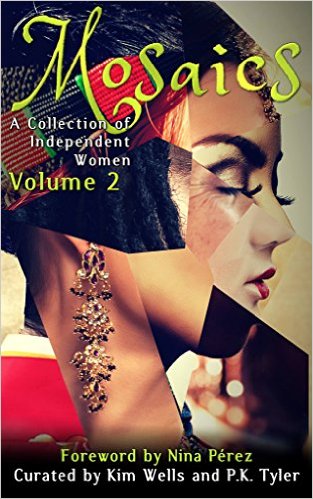
    On May 1, I will be celebrating my first official Launch Day! My essay, “Border Talk,” is part of the anthology Mosaics 2: A Collection of Independent Women! Mosaics Vol. 1 launched on March 8 (International Women’s Day), and I was so excited to celebrate with those authors. Now we’re gearing up for a second round of celebrations!

    Look at our beautiful book cover!

    Mosaics 2 Cover

    (Image description coming.)

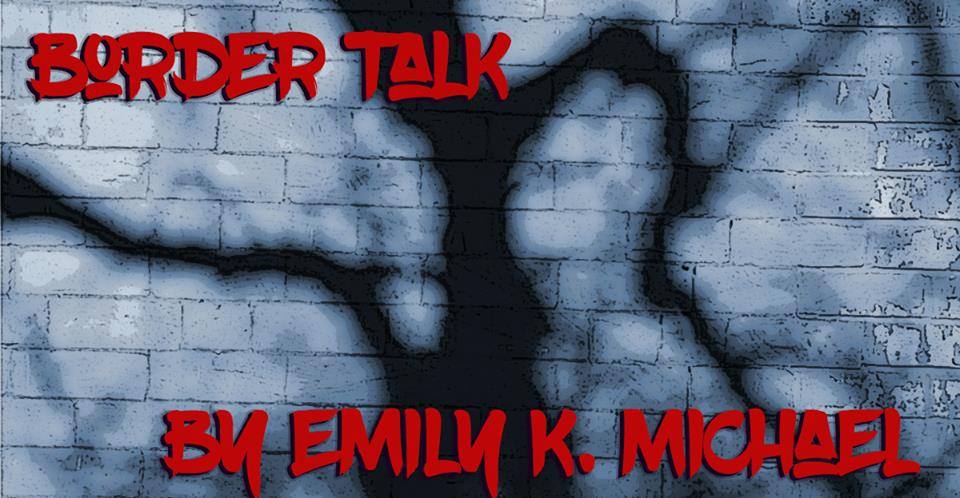
    And this is the promo art for my essay:

    Border Talk Promo Image

    (Image description: Blue grey bricks outlined in an almost graphic novel style are contrasted with a dark black skeletal bare tree shadow. The words “Border Talk” appear in the upper left corner in a brush handwritten font, in red. “By Emily K. Michael” appears in the same red font on the bottom right.)

    To kick off the festivities, I’m hosting a giveaway through Rafflecopter. I’m giving away 3 copies of the Mosaics 2 Kindle ebook! Want to win? Check out the info below:


    a Rafflecopter giveaway
    https://widget-prime.rafflecopter.com/launch.js

  • How the Silver Screen Tarnishes Disability

    Some of you probably think I talk about disability too much or that I sound bitter about certain disability issues. Watch the movie trailer for Me Before You. It will show you why I frequently express irritation.

    My problems with this trailer:

    1. The disabled guy has nothing to live for until the nondisabled girl comes into his life
    2. The nondisabled girl isn’t living life to the fullest until the disabled guy (who has now presumably lost his chance at a full life) preaches to her
    3. The disabled guy and nondisabled girl turn a professional relationship between caregiver and client into a romance.


    I am not saying that people can’t use their experiences to teach others a lesson. I’m not hating on inspiration or romance, and I’m not saying that we can’t learn from others’ losses. But I’m really tired of these types of stories wherein the disabled character is only around to a) teach a lesson to the nondisabled world or b) serve as an object of pity because he hates his own life. You’d be tired, too, if you never saw characters that shared your gender, religious identity, career, physical appearance, etc. being written well.

    “But Emily, don’t all movies use stereotypes? Don’t all romantic comedies rely on the goofy guy, the clumsy-but-cute gal, the fearless career woman who needs to learn to relax, the party boy who needs to grow up?”

    Absolutely they do. The difference here is that disabled characters are extremely rare. There’s not even one disabled character per film. And they usually serve as objects of pity, one-dimensional inspiration, tragedy, or comic relief. When is the last time you saw a movie where a blind person or Deaf person was just doing their job – just baking muffins or filing papers or teaching a class? The disabled person portrayed as a person with dreams, goals, and self-determination is extremely infrequent.

    In the synopsis of the book that inspired this film, the disabled guy encourages the nondisabled girl to live a fuller life and go for her dreams. Why isn’t he going for his own? Because in the universe of this film, he can’t have a real life. His only scrap of happiness will come from his new caregiver-turned-girlfriend. Where is his career, his passion, his connection to a larger community?

    I implore you to ask for MORE from stories of disability. Demand fully human characters with their own desires, fears, hopes, skills, and challenges. Demand disability in three dimensions, and stop supporting these stories that sell a flat, stereotyped version of disability.

    Watch the trailer here. Avoid the book and film everywhere.

  • Essay: “Stylish Negotiations”

    My latest essay, “Stylish Negotiations,” was published in the March issue of Wordgathering: A Journal of Disability Poetry and Literature. This essay decodes the submission guidelines of several disability-related journals and magazines and offers a course of action for handling stories of disability. It begins as follows:

    “Submission guidelines rarely make me angry. Perhaps because I seek out publications that share my interests–ecology, feminism, disability, music, language–all the specifications can start to look the same. Most journals want a well-rounded submission, free from religious agendas, offensive stereotypes, and one-dimensional fables of inspiration.

    When I find a publication that seems promising, I scroll through the journal’s ‘About’ page and submission guidelines. Here is where I can make some serious assessments. Journals lose my interest if they proclaim, ‘send us your best work’ or ‘we only publish good poetry.’ I won’t let my students use ‘good’ and ‘bad’ as standalone terms for evaluation, so I hesitate to send my work to a journal that won’t express its own agenda in more vibrant language.

    Among publications that promote the work of disabled writers, the guidelines evince a similar aesthetic. Here are excerpts from three journals committed to sharing the work of writers with disabilities…”

    Read the full essay here.

  • Reverse-engineering rhetoric: Some informal thoughts

    So many disability resources and testimonials talk about regaining dignity. With the help of a new product, service, or skill, a disabled person can reclaim their independence and sense of self. I do not dispute this at all.
     
    But if this “reclaiming reclaiming dignity” message is the go-to strategy in disability services, perhaps we can see it for what it is: a lens onto a culture that devalues disability. So perhaps we shouldn’t be trying to buy, learn, or sell dignity. Perhaps we should reevaluate the identities we’re willing to give disabled people. If we are determined to see a loss of dignity with the onset of disability, then we will need a recovery. But what if there was no loss of dignity? What if we accepted that our bodies and minds could be frail, unpredictable, or messy? And what if we said, “Hey, that’s MY frailty, MY mess, and it’s a sign of being alive.”
     
    I don’t think life is about perfecting our bodies so that our genes never garble or trip. I don’t think it’s about building bodies that never make mistakes, that perform every task with mechanical accuracy. I think it’s about building a society that respects and endorses difference, a society that doesn’t seek to push disability to the margins.
     
    Because what I see most often is that disabled people themselves think they have dignity that needs reclaiming. They face a physical or mental impairment, but they internalize a loss of self. They feel they have something to prove—as if they must earn our respect and their own self-respect all over again.
  • 35 in 2015 : What I read this year

    In January, I set up a challenge through Goodreads: to read 35 books in 2015. So here are my books—a snapshot of my literary consciousness this year!

    1. A Stranger to Command by Sherwood Smith
    My first book of 2015 was a leisurely choice, the prequel to Sherwood Smith’s Crown Duel. I was so moved by this absorbing novel that I wrote an extensive response (which you can read here). Suffice it to say that Smith’s beloved characters and lively prose are pretty addictive. I won’t tell you exactly how many times I’ve replayed the audiobook this year, but I will say it’s more than four. A Stranger to Command is a book I return to in stressful times; I love getting wrapped up again and again in this story.

    2. Remalna’s Children by Sherwood Smith
    Continuing my explorations of Smith’s fantasy universe, I choose this short book—which is actually two long short stories. If you’ve read any of Smith’s works, this addition is intriguing and delightful, adding to the Crown Duel story arc.

    3. Jane’s Fame: How Jane Austen Conquered the World  by Claire Harman
    This text was a fascinating look at how Austen’s work and reputation have been handled in and out of the academy. While some chapters were a little slow, Harman offers some interesting historical details about Austen’s relationship to money, Austen’s image, and Austen’s occasionally off-color correspondence.

    4. Senrid by Sherwood Smith
    Alas, a disappointing read. Possibly because this book collects some of Smith’s earliest work, it seems fragmented and a little silly. Though I enjoyed learning about Senrid, who makes an impressive appearance in A Stranger to Command, I did not enjoy this book overall. It is not a cohesive novel, but rather four separate parts which—and I use the term generously—fit together.

    5. The Art of Possibility: Transforming Professional and Personal Life by Rosamund Stone Zander & Benjamin Zander
    Since reading this book, I have purchased it for several friends and relatives. The Zanders (husband and wife) offer several principles for approaching difficult circumstances. Their anecdotes are far from the saccharine stuff of most self-help books. And the audio version of the text is well worth a listen. Because the Zanders co-authored the text, they take turns narrating, and Ben Zander, conductor of the Boston Philharmonic, includes excerpts from the classical pieces he discusses.

    6. Danse de la Folie by Sherwood Smith
    This book is the first I’ve read of Smith’s forays into historical fiction—and it is superb! Set in Regency England, the book offers a lighthearted storyline and tons of jokes for literary devotees. From the naming of characters to the comments on Regency fashions, it’s obvious Smith has done the research to create this wonderful book.

    7. The Sense of Style: The Thinking Person’s Guide to Writing in the 21st Century by Steven Pinker
    If only I could make my students read this book! From Pinker’s brilliant chapter on the structure of sentences (where he introduces “the web, the string, and the tree”) to his intense, 100-page catalogue of the most hotly debated “errors” in Standard English, this text is comprehensively brilliant. Each chapter treats with a different aspect of what makes good writing: the sound of it, the level of complexity, the style, the grammar. I’d say that this text is more accessible than Pinker’s other works on linguistics, so if you’ve never indulged in his work before, start here.

    8. His Majesty’s Dragon (Temeraire #1) by Naomi Novik
    This is another book that I keep on my iPhone at all times. Narrated by the talented Simon Vance, His Majesty’s Dragon is the first in the Temeraire series—which occupies about 20% of this list. It’s an excellent dip into Novik’s Napoleonic fantasy world, a world populated by intelligent, witty, mischievous dragons. Read my meditations on guide dogs and dragons here.

    9. Throne of Jade (Temeraire #2) by Naomi Novik
    I’ll keep my comments brief as I cover the remaining Temeraire novels on this list. In Book #2, the characters travel to China: it’s a strong sequel to the first in this series.

    10. The Language Hoax: Why the World Looks the Same in Any Language by John McWhorter
    From this delightfully snarky linguist comes a fascinating book on how languages work—debunking the pop linguistics ideals that are often most cherished. McWhorter’s sensible analysis asks us to turn our language myths on English and see if they hold true. This book is dense and complex, but it repays the reader’s effort.

    11. Black Powder War (Temeraire #3) by Naomi Novik
    In this third installment, the characters cover a lot of ground, returning to the battles of the Napoleonic War by way of Turkey. Again, Novik has created a thrilling tale—introducing new characters and adding dimension to the Temeraire universe.

    12. Empire of Ivory (Temeraire #4) by Naomi Novik
    Well, we’ve gotten to a Temeraire book I didn’t particularly enjoy. This one finds our characters in Africa. Though this one moves the story along, I don’t think it’s as strong as #1-3.

    13. Wuthering Heights by Emily Brontë
    I decided to revisit an old classic this summer. I first read this book in high school, and I fell in love with Brontë’s tortured characters and metaphorical landscape. However, WH didn’t hold up to a second reading, I’m sad to say. I got irritated with Catherine’s antics and Heathcliff’s brooding. Perhaps this is a book that fits best with the tumult of adolescence.

    14. Victory of Eagles (Temeraire #5) by Naomi Novik
    An absolutely outstanding novel in this series! This book broke my heart, repaired it, warmed it, and broke it again! It’s totally worth suffering through #4 to get to #5!

    15. Tongues of Serpents (Temeraire #6) by Naomi Novik
    Another strong addition to the series, this novel finds our characters in Australia! It’s a little dreary in places, but I still enjoyed it.

    16. The Genius of Dogs: How Dogs Are Smarter Than You Think by Brian Hare
    A delightful exploration of canine consciousness, Hare’s book explains how dogs reason and what is important to them. I particularly enjoyed Hare’s history of genetics and his commentary on canine evolution.

    17. Tolkien’s Ordinary Virtues: Exploring the Spiritual Themes of the Lord of the Rings by Mark Eddy Smith
    This is the first book I’ve really despised in a long time. It’s nothing but a drawn-out, poorly written homily that uses Tolkien’s work for convenience. For one thing, the author commits one of my writerly pet peeves: using the word “spiritual” as code for “Christian.” If you mean Christian, just say so. Secondly, he provides only superficial commentary, mostly just reciting the plot of LOTR. For Tolkien fans and Christians alike, this book is a waste of time.

    18. Crucible of Gold (Temeraire #9) by Naomi Novik
    This time, our characters have traveled to Brazil—and while the book offers fascinating descriptions of Brazilian culture, it’s not a bright spot in the series. I enjoyed it, but I’m unlikely to reread it.

    19. French Lessons: Adventures with Knife, Fork, and Corkscrew by Peter Mayle
    Oh, I am never disappointed by Peter Mayle! I read  A Year in Provence in an undergraduate Faces of France class, and I’ve been hooked ever since. In this book, Mayle explores several interesting culinary traditions in France—from a festival of frogs’ legs to the creation of the Michelin guide. This book is an utter delight, recommended for foodies.

    20. The Marseilles Caper by Peter Mayle
    A witty, sun-drenched mystery novel set in the succulent city of Marseilles! Read it with a snack nearby! The audio version is particularly yummy; I like hearing someone else pronounce all the French words.

    21. The Botany of Desire: A Plant’s-Eye View of the World by Michael Pollan
    I learned so much from this book! Pollan’s prose is absorbing, and his references are extensive. I kept flipping to the bibliography and adding items to my Amazon wish list. The book is accessible, philosophical, and fun.

    22. The Educated Imagination by Northrop Frye
    This book contains Frye’s six legendary essays on the purpose and vocation of literature. It’s essential reading for all English teachers and writers, and it’s edifying for everyone.

    23. Uprooted by Naomi Novik
    Here is Novik’s attempt to write something other than Temeraire: she retells a Polish fairytale about a haunted wood, a sorcerer, and an unlikely heroine. My main complaint with this text is that it’s too long. There are several places where I expected the story to end, but it kept on going. The book has some truly beautiful passages and interesting characters, but I would rather it had covered less and told more. The story feels stretched and shallow to me.

    24. Blood of Tyrants (Temeraire #8) by Naomi Novik
    Another disappointment. This novel that attempts to tie up all the loose ends before the final Temeraire book (which won’t come out until next year). Strong style but weak plot here.

    25. The Modern Scholar: The Anglo-Saxon World by Michael D.C. Drout
    This “book” is technically one of Audible’s Great Courses, a series of 30-minute lectures centered on a theme. But if Goodreads calls it a book, I’ll call it one, too! If you’re an Old English nut like me, you’ll love this course. They provide rich background about the classics of Angl0-Saxon literature as well as explaining some language and history. Plus, Drout reads several texts aloud, and his pronunciation is admirable.

    26. The Shepherd’s Crown by Terry Pratchett
    I read this book with great sadness because it was the last one Pratchett worked on before his death. It bears the marks of this untimely composition; some elements of the story are not really fleshed out, and Pratchett’s morals are a little too close to the surface. Nevertheless, it was enjoyable.

    27. You’re Wearing That?: Understanding Mothers and Daughters in Conversation by Deborah Tannen
    Though this book has some gems to offer, it’s not as enjoyable as Tannen’s You Just Don’t Understand: Women and Men in Conversation. Once you’ve read one Tannen book, it feels like you’ve read them all. Her research involves the same conversational matrix of competition and cooperation, which is fascinating, but this book seemed repetitive.

    28. Big Magic: Creative Living Beyond Fear by Elizabeth Gilbert
    An enjoyable and succinct read with lots of cool anecdotes! Gilbert’s advice breaks the tradition of the tortured artist. Instead, she offers a refreshing portrait of an artist who is centered and productive.

    29. Creative Schools: The Grassroots Revolution That’s Transforming Education by Ken Robinson
    Robinson is another writer who uses accessible prose and superb sources. This book tackles several issues in education and offers practical solution to each. It’s dense only because Robinson covers so much ground, dipping into educational history as well as current politics.

    30. Modern Romance by Aziz Ansari
    Hilarious, engaging, and—believe it or not—educational! Ansari’s witty, flippant book on dating in the 21st century invokes a ton of legitimate psychological research. And for once, he’s not saying that we young people are doomed to intimacy-starved lives. Through research, he offers several solutions to the online dating conundrums and busy schedules we all face.

    31. Between You & Me: Confessions of a Comma Queen by Mary Norris
    What an indulgent read! All writers and English teachers need to read this book—or better yet, listen to Norris read the audiobook. She tackles many of the serious language concerns covered in academic texts, but instead of dry research, she relies on her experience as a copy-editor for The New Yorker. After I finished this book, I was begging to be a Comma Queen.

    32. Bossypants by Tina Fey
    Since getting hooked on 30 Rock, I wanted to read this book—and I was not disappointed. Fey uses humor and stylish prose to address all kinds of issues: fame, feminism, politics. It’s an excellent memoir.

    33. Seriously…I’m Kidding by Ellen DeGeneres
    Let’s just say I’m glad I borrowed this one from the library. I was disappointed. Rambling, disconnected, pandering, unremarkable. I think Ellen could do a lot better. I wouldn’t be proud of this book if I had written it.

    34. Letters to a Young Teacher by Jonathan Kozol
    Incredible. Kozol handles many of the most heartbreaking issues in education without losing hope. His book is a must-read for all teachers, parents, students, citizens. It’s so well done, rich with revelations.

    35. The Wisdom of the Shire: A Short Guide to a Long and Happy Life by Noble Smith
    Now here’s an author who knows how to write about Tolkien—with humor, thoughtfulness, and respect. This little book is enjoyable and informative; I picked up a few Tolkien tidbits from its pages!

    So what’s on the shelf for next year? Probably more linguistics, nature writing, biographies, and food writing. And of course, that ninth Temeraire book. I’ve also resolved to read more poetry.

    What would you add to the list?
  • Two Poems Published!

    The December issue of Wordgathering is out, and it contains two of my poems: “Wordbomb” and “Old Music.”This is the 36th issue of Wordgathering, rounding off its eighth year as an online publication.

    Just above the text of each poem, there is a link to the audio version, which I recorded. I love that this journal offers poetry in audio and visual formats. Poetry isn’t confined to one kind of perception; each sense shades a poem differently.

    Read the poems here.

  • October Interviews: Elaine from Pennsylvania

    Our next interviewee is Elaine Mara, age 28. She lives in Pennsylvania and works with disabled individuals at the high school level, preparing them for the transition to college or work. She enjoys public speaking, disability awareness, guide dog lifestyle awareness,  creating and delivering dynamic presentations, and composing music for piano.

    How would you describe your vision loss? Is it congenital or has it developed recently?

    Without getting too technical, here’s the simplest way to understand it: I was born with
    underdeveloped optic nerves and a host of other diagnoses. Growing up, my vision was pretty stable, though I needed large print to read and I tripped over my own two feet all the time. As an adult, I had noticed that my periphery on my right side was closing in and so began four long years of tests, two brain surgeries, and many follow-ups. Today, I have 20/50 vision in my left eye; 20/70 vision in my right eye; 20/50 vision with both eyes open (all on a good day) but I have a visual field of around 10 degrees in my right eye and somewhere around 20 degrees in my left eye. I have nystagmus, an eye movement disorder, that makes focusing very difficult but I’ve worked hard over the years to learn to live with all of this!

    Do you use a cane, guide dog, or other mobility aid to get around? Why have you chosen this aid?

    Most currently, I am using a cane to get around because my first guide dog, who I trained with back in 2014, decided to retire early. Before I got him, I was an avid cane traveler but I found my confidence dwindling as my eyesight was changing; that’s where Guiding Eyes for the Blind (GEB) came into my life and changed it drastically. I am currently waiting to go back into class at GEB to train with a successor dog, hopefully early next year. I much prefer the dog to the cane.

    With the cane, I’m always bumping into things and running up the backs of people’s feet when I’m walking much faster than they are. With a dog, we avoid the obstacles and the travel is much more fluid and friendly, too. I have met so many wonderful and unique people just doing my day-to-day activities when I’m with my dog than when I’m with the cane. People, kids especially, have a great love for the fur at the end of the harness and they marvel at what he can do for someone like me, so they’re more apt to approach me and socialize with me than when I’m accompanied by a stick with no personality. Who want’s to cuddle a cane? Not I!

    What is the most consistent challenge or frustration you experience with your low vision? How do you handle it?

    For me, low vision means I’m constantly in limbo. Sometimes I can see and do a task flawlessly with the vision I have and other times, I’m lucky I don’t make a mess. Personally, I laugh it off and let it go because I know what’s really going on. Some days, my vision rocks and others, it decides it doesn’t want to get out of bed in the morning but that’s all internal; it’s not like everyone else can see it, so some days, it does get tiring having to explain the same concept to ten different people, though I know it’s usually because they’re curious.

    What resources have helped you to handle your low vision best, either in everyday matters or in moments of crisis?

    I truly believe everything in this life takes a village. My biggest assets are the people I have on my team. My family has been my rock. The last four years have not been easy with my vision and neurological conditions and yet, they’re still by my side, taking me to appointments and holding my hand when the news comes down. We celebrate the good days and shake off the bad…together. I have two amazing eye care specialists and a neurosurgeon who are always available if and when I need them. I have rehabilitation professionals who have hearts of gold and care only about my success. I have the technology and skills, too, but nothing is more important than trusting, caring relationships when life hangs upside down.

    What would you say is the most harmful or annoying belief that people have about vision loss? How do you cope with this belief?

    I think the most harmful belief that people have is that vision loss is all or nothing: that we are either sighted or we’re blind. I don’t think people understand that, like anything, vision loss exists on a continuum and because it is not a static, unchanging characteristic, there are going to be days where a pot on the sidewalk will be seen and avoided without contact and there will be others where that same pot, on that same sidewalk will fall in an area of blindness and not avoided, tripped over and harm done. The truth of the matter is: vision is constantly changing. We live in a world where so much of life is consumed by the visual that those of us who use different senses have a unique way of looking at the world and it should be appreciated for what it is.

    What’s your favorite way to celebrate autumn?


    I love walking in the autumn weather. Hearing the leaves crunch under my feet. Smelling the burning firewood from nearby bonfires. Fall is such an aromatic season, built for the senses. When I have my guide dog, I love taking them out to play in the leaves and making huge piles for them to romp in.

    What is a book that you could read over and over again? Why do you feel this way about it?

    I could read Shel Silverstein’s poetry over and over again because there always seems
    to be subtle nuances and imagery that come to mind when reading his work in all different moods.

    What book, person, or perspective makes you feel most centered as a writer?


    I feel like there is no one person or perspective that can center a writer. Yes, there is
    subject matter that each of us excels in writing about but that subject has many perspectives, many details, many events that combine to make that person an expert. I enjoy reading blogs the most because they tell a different kind of story; I feel that they give meaning to a person’s life and provide their perspective on the world in which they live and their readers gain another insight into the world in which they live. Blogs can be so very inspiring and uplifting and if a reader is committed to a particular blog, that individual will get to know the writer or creator in a way that stories and articles can’t.

    Blogs have added an entirely new dimension to the world of literature and how we experience the world. I believe in the power of words and using as many formats to put those words into action as possible.

    What is one dream you hope to accomplish in the next 10 years?


    In the next ten years, I would love to be a published author, traveling the world with my guide dog, telling my story and inspiring others to work through the difficult times in their lives because there is always something bigger on the other side of challenge. I want to make a difference in this world and I want my story to mean something to someone somewhere. I’d love to be married and, maybe have a family, but I want to know myself first!

  • October Interviews: Krista from FSCJ

    Krista Waters, age 29, is a DeafBlind Human Services major at Florida State College at Jacksonville. She has found her passion working with other disabled people, and she currently holds two positions in disability services organizations. She enjoys discussing assistive technology, self-advocacy, and accommodations for disabled students and employees. She agreed to talk with me about her academic experiences.

    Why did you choose to attend Florida State College at Jacksonville?

    I chose this institution because the disability services are incredible. The staff really embraces the students they are in charge of educating.

    What is the most significant access issue you’ve had in college? How was it resolved? Was this solution ideal?

    I would say the most difficult access question has been access to materials in a timely manner. Because I am visually impaired as well as hearing impaired, things can take a while. I receive syllabi in advance, handouts in advance if available. However, computer software still leaves a lot to be desired. Its not always accessible for people who use screenreading programs like JAWS. I’m flexible though. I’ve realized when I’m fighting for accessibility for myself, it’s not always about me in the long run. It’s about my fellow students and peers as well.

    If you could implement training for faculty or staff, what skills or concepts would you emphasize?

    I would emphasize that all students are different. Just because you have had one blind student does not mean the second or third blind student will require the same things. Your student comes first, then the disability.

    How do you judge whether a professor will be a good fit for you? What clues in the syllabus or in their personal communications let you know that they’re willing to collaborate with disabled students?

    Whether a professor is a good match for working with our college’s disabled population is based on a number of well-defined factors. First of all, a lot is based on the student’s first meeting with the professor in question. Does the student email and ask for a meeting (something that is highly recommended)? Does the professor respond in a timely manner? Does the professor seem interested and open to your request for a meeting? Are you clear about your disabilities? Does the professor ask good questions related to you being in this class and how to make the environment as conducive as possible?

    What’s the most satisfying project you’ve completed during college? Why do you feel this way about it?

    The most satisfying project I’ve performed in college is my Cold War presentation in my American History class. I’m a quiet person by nature, especially in the classroom environment. I have difficulty speaking up in the classroom, and the professor in question took it upon himself to ensure I became comfortable. He did not ignore me; instead he engaged me. I did my presentation complete with PowerPoint.

    What was the most challenging college course you’ve ever taken? Why was it so challenging?

    I think the most challenging class I’ve taken thus far is my Integrating Educational Technology class. This class was all lab-based and completely 100% visual. As a visually impaired person, I like to be as independent as I can, and this class challenged my sanity.

    What advice would you give to disabled students entering college for the first time?

    I would say talk to other college students who have disabilities. Know what your rights are and understand the terminology related to disability accommodations. Try first and if you do not get anywhere, then ask for help. Talk to your professors: open and honest communication.

  • Quick Q&A | Emily of On the Blink

    Adventures in Low Vision is also celebrating Blindness Awareness Month with interviews! Here’s mine. Enjoy!

    adventuresinlowvision's avatarAdventures in Low Vision

    The celebration of Blindness Awareness Month continues here on Adventures in Low Vision. Today I’m launching the Quick Q&A series. Check in over the next few days to hear from people who all have their own unique perspective on blindness. Don’t miss a post–subscribe on the right sidebar!

    Today you’ll hear from Emily, the writer of the blog On the Blink. Enjoy.

    Headshot of Emily

    Q: Name/Region.

    A: Emily K. Michael from Jacksonville, FL

    Q: Describe your visual impairment in one sentence.

    A: I have low vision and am extremely sensitive to light.

    Q: How do you want others to refer to your vision loss?

    A: I call myself a blind woman, so others can, too!

    Q: Why did you start blogging?

    A: I began my blog as a way to keep my prose in shape, to play and experiment with my writing. I never thought of it as an educational tool…

    View original post 163 more words

Emily K. Michael

Emily K. Michael is a blind poet, musician, and writing instructor. She serves as the poetry editor for Wordgathering at Syracuse University. She is also a poetry mentor in AWP’s Writer to Writer program. Her work focuses on music, embodiment, teaching, and ecology. Emily is passionate about birds, medieval history, singing, and guide dogs.

Pre-order My New Book

Purchase Neoteny

Email Subscription

Enter your email address to subscribe to On the Blink and receive new posts by email.

Watch my TEDx Talk!

What I’m Reading