• Access at the Outset

    My last few days of calm are dwindling: the summer semester begins next Tuesday. I’ve finished my syllabus and course schedule, plugged in all the links and files on Blackboard, and gathered up the necessary textbooks. I’m putting the finishing touches on my Welcome Letter, a document I email to my students a few days before the course begins.

    The Welcome Letter (WL) is a trick I snagged from the realm of online teaching. Many online instructors send out their version of this document to introduce students to the course, tell them where to find readings and assignment prompts, and explain how the course will proceed. Because I will give a face-to-face course introduction on Tuesday, I don’t clutter the WL with info about the course specifics. I just explain how to navigate our Blackboard page, give my contact info, and offer a few tips for getting started with the course readings.

    But just before my cheerful signature (“Cordially, Professor Michael”), I’ve added a final clause: Access Needs.

    Any students with disabilities are free to contact me with access needs. On the first day of class, we will be dealing with printed handouts and video lectures. If you require large print or other accommodations, just send me an email explaining your needs.

    Why did I include this statement in my letter? How likely am I to have a disabled student in my class? Well, based on my own experience, not very likely. I’ve been teaching for four years, and I’ve never had a blind or Deaf student, never had a wheelchair user. I’ve had a handful of students with learning disabilities, but no one has ever asked for large print or other alternate formats.

    The statement exists on my WL for a few reasons. I’ve yet to have my First Blind Student, but I was a first for almost every instructor I had. And I remember the reactions: good, bad, awkward, ecstatic, nervous. I want to make sure that disabled students feel acknowledged by my WL. Explicit acknowledgement is so much more powerful than implied acknowledgement.

    Another priority is visibility. Even if my access statement doesn’t apply to any of my current students, these nondisabled students get to see what an inclusive space looks like. It’s a place where access is elevated, shown off, bragged about. Begone, dreary legalese of accommodations! I want to make access sparkly and fun!

    I plan to build a classroom that welcomes as many different bodies and minds as possible. I want to make space for imagination. I know I can’t physically prepare for every kind of student, but I will make my classroom a space where the dialogue of difference thrives.

    A commitment to access needs to envelop the course. It’s not enough to rush through the required disability statement on Day One. Access must be addressed before the course begins. Forethought and imagination are what separates access from accommodation—and they’re qualities I want my students to cultivate.

  • Poem Published!

    My poem, “Crushed,” is live in the June issue of Wordgathering: A Journal of Disability Poetry and Literature.

    Click here to read it—or listen to me read it for you!

  • Appearing at SAMLA 88!

    Literary scholars, mark your calendars for SAMLA 88! The South Atlantic Modern Language Association’s annual conference is coming to Jacksonville in November—with the theme of Utopia/Dystopia: Whose Paradise Is It?

    And guess what?

    They accepted my workshop proposal! Michele and I will be presenting a fabulous workshop you won’t want to miss! Don’t believe me? Check out our proposal below:

    Insensible Paradise, Invisible Nightmare: Complicating Embodiment in the 21st Century Classroom

    In this workshop, Emily K. Michael and Michele Boyette map the conflicts between literary and literal bodies, exploring the paradoxes and pleasures of disclosure. The safe distance of metaphor and the legality of red tape have contrived a minefield for academics—both disabled and nondisabled. We disabled faculty hardly expect nondisabled colleagues to be conversant with the latest activism, yet we seek the most productive and empathetic environment for our disabled students. This nebulous landscape harbors a failure of imagination; our colleagues and students have no guide beyond the literature they discuss.

    Most academic encounters with disability occur in print or onscreen. Professors and students fathom disability through assigned course materials often created outside the disability community. When we experience disability as chiefly secondhand, we learn to view disability as a frame for analysis and interpretation, rather than a commonplace human condition. Disabled students and faculty become impromptu teachers regardless of their expertise or interest in teaching.

    Once on campus, disabled students disclose their disability and learn to negotiate accommodations. However, the red tape that protects a student’s privacy can also foster silence and estrangement. The disabled instructor’s disclosure is equally fraught with complications. She travels in a department that regularly employs problematic representations of the disabled body.

    Emily K. Michael, a blind adjunct instructor at the University of North Florida and Florida State College at Jacksonville, creates productive dialogue with disabled students and redesigns course language to invite disability into the classroom. She helps faculty to examine their syllabi, course texts, and assignments to produce an empathetic, three-dimensional understanding of embodiment.

    Michele Boyette, instructional coordinator at the UNF Writing Center, speaks from her position as a nondisabled instructor who encounters the invisible and visible disabilities of students and staff. She complicates the uneven responsibility of disclosure by highlighting the impracticality of red tape in appointment-based tutoring sessions.

    Together we open a space where faculty are unafraid to examine disability off the page. We target faculty who have found little occasion to research disability on their own. We offer practical strategies for widening academic imagination to welcome the disabled student or colleague. This workshop is an informal and informative playground for the tabooed bodies and minds appropriated by our academic environments.

  • Concern By Any Other Name

    Once upon a time, two teenage lovers shared a famous conversation over a balcony rail. It was a dark Verona night, and their passions were fired by a chance encounter at a happening house party. We know these two as Juliet and Romeo.

    The house party was at Juliet’s place, and the meeting was unexpected because Romeo wasn’t on the guest list. In fact, if you’ve read or seen any adaptation of this story, you know that these two kids were straddling a serious family feud. The Montagues (Romeo’s folks) and the Capulets (Juliet’s fam) did not like each other.

    So when Juliet croons over the veranda rail, “Wherefore art thou Romeo?” she is not, as many first-time Shakespeare explorers think, asking where Romeo is. She’s using that fancy Elizabethan word wherefore, meaning why? or how come? She’s saying, “Why does he have to be a Montague?” or “It would be much easier if he was from a different family!” As Juliet moves through her reasonable complaints, she arrives at this resolution about names:

    What’s in a name? that which we call a rose
    By any other name would smell as sweet;
    So Romeo would, were he not Romeo call’d,
    Retain that dear perfection which he owes
    Without that title. Romeo, doff thy name,
    And for that name which is no part of thee
    Take all myself.

    Juliet says the name doesn’t matter. Call him what you want, Romeo’s still a dreamboat. And she’s remarkably egalitarian: she offers to give up her name as well. Either way, the names aren’t going to keep them apart.

    Though the story is a few centuries old, it still commands us to honesty. It reminds us that language must bear up the testimonies of our senses.

    Today, our feelings often go “by another name”: we don’t want to admit what we’re feeling, so we call it something else. And this renaming drives up emotional costs. Let’s look at the emotion that gets the most makeovers: Fear.

    Fear regularly dresses up as concern and pity, because concern and pity offer us distance and power. In her article “Why Your Fat Friend Doesn’t Need Your Health Concern – And What to Do Instead,” author @yrfatfriend describes the kinds of “concern” she has faced from friends, teachers, and strangers. Based on their initial perceptions of her health—ah, let me rephrase, based on their visual judgments of her body—people offer unsolicited medical advice, diet advice, and comments on her personal history. One stranger even says that her weight gain must have resulted from her daddy issues; presumably her father abandoned her and she has been eating to fill the void.

    It does not matter whether the givers of advice believe they are correct. It matters that their advice is patronizing, intrusive, and presumptuous. But because @yrfatfriend is fat, people assume that she requires their ministry, that she is dying for a different body.

    Such “concern” fails to consider the human in the problematic body. The “concern” is the privilege of the beholder: the one who can assess the body at a glance and rewrite its story.

    @yrfatfriend’s story resonated with me because I have often had my own story rewritten in just this way. Nondisabled strangers approach me to ask if they can pray for a cure: they don’t need to ask if I want to be cured. In their story, I am hopelessly bereft and longing to be fixed. That is why my sense of humor and ready smile are so remarkable. Disability is such an inevitable tragedy that I must possess special fortitude in order to consider myself whole and unmarred.

    When I walk into a room, when I order coffee, when I purchase a pair of earrings, I am working in the shadow of powerful narratives history has built against me. Disabled bodies have already been written as defective and unworthy of love  (hence the recent popularity of Me Before You, in which a disabled man chooses the “understandable” option of suicide). I, and my disabled colleagues, expend enormous amounts of energy taking back our bodies and our stories, rewriting ourselves on our own terms.

    There is no body so “deformed,” “disabled,” or “undesirable” that it deserves the unsought judgements of others. What we think of as “concern” and “pity” are really high-fashion fears, designed to give us distance. The non-fat fear becoming fat, the nondisabled fear becoming disabled. So they hide their fear in “concern”—and from this platform, they can offer advice, prayers, help. These offerings reinforce their status as benefactors, the “more fortunate” in their cold equation of personal worth.

    These benefactors are often shocked when we don’t want their concern. We don’t want it because we recognize that feeling as a one-way street: from their fear to our bodies. Such concern doesn’t let us offer anything of value in return. That’s when I call on Juliet: “Wherefore art thou concern’d?”

    I can count on Juliet to ask the tough questions.

    Why am I afraid? Why do I see that person’s life as tragic? Why do I feel they have nothing to teach me?

    Fear destroys empathy. Make it answer for all this maneuvering.


  • Essay: “Working Resonance: Concerto for Guide Dog, Handler, and World”

    I’m excited to announce my first publication in The Hopper, an ecologically minded literary magazine from Green Writers Press! Today they published my essay, “Working Resonance: Concerto for Guide Dog, Handler, and World.” Here’s how it begins:

    “In darkness, the audience rises, applauding the last performance of the evening. Before I can bang my hands together with wild abandon, I slide my guide dog’s leash back over my arm, into the crook of my elbow. My companion rises from his prone position and assumes a dignified sit, scanning from left to right. He recognizes the applause as a signal for our imminent departure.

    The house lights come up, and I pull on my heavy coat. In the presence of my wiggly Labrador, this maneuver requires some concentration: hold York’s leash with left hand and slide right arm into sleeve, loop leash over right arm and slide left arm into sleeve, loop leash back over left arm and fasten inside buttons, fasten outside buttons, pick up crossbody bag and slide strap over left shoulder, don’t tangle with leash. When I’m fully equipped to handle the chilly night air, I stand beside York and we wait for the crowd to thin out.

    ‘Beautiful dog,’ a man remarks as he pauses by my seat. One foot rests on the next step up, and he leans around a large column to stare down at my pup. York’s shiny black fur contrasts with his leather guide harness. ‘Does he like the music?’

    My hand moves to York’s silky ear, a gesture of habitual comfort. ‘Actually, he prefers Romantic composers. But he said he would come hear Mozart with me.’”


    Read the entire piece here.

  • Why We Still Need Literary Spaces for Disabled Writers

    In spring of 2012, I was preparing to graduate with my M.A. in English. I was teaching with a respected professor and touching up my first real CV. Terrified of the great blankness that would follow graduation, I planned to teach, but I had no idea how I would continue to meet intelligent and fascinating friends. My colleague passed along a call for student essays on the experience of disability, and I accepted — just so I’d have something to occupy those nebulous weeks after graduation.

    I worked on the essay, an exploration of how I came to accept my huge dark glasses, and sent it off. I called it “Shades of Shame.” It was the first piece I ever sent out, the first to be accepted.*

    Though I had started this blog a few months earlier, I still couldn’t believe that strangers liked my work. I had always written stories and shared them with friends, and I had done well on school essays and presentations. Friends liked my work because they liked me, right? Teachers liked my work because I was passionate about the topic and I followed the directions. Audiences liked my presentations because I enjoyed speaking.

    By autumn of 2012, I was teaching my first writing courses and coping with the death of a close friend. I responded to another essay proposal, which led to my piece “Surprised by Disability.” This essay ran in a special issue of Narrative Inquiry in Bioethics, a journal published by Johns Hopkins University. The issue’s theme was “living with the label ‘disability,’” and my essay described the visual rules used to judge abilities and disabilities — rules even invoked by blind people. Again, I was surprised to be accepted, but I felt a greater measure of confidence: I had strong opinions on labels and terms. The acceptance made me crave a platform — the value in having a space where I could speak and others would listen.

    In March of 2013, my first published poems appeared in Wordgathering: A Journal of Disability Poetry and Literature. For months I wondered whether I had just gotten lucky. I wouldn’t feel like a real writer until I had published more. After several positive interactions with editors, I realized that this strategy was a harmful lie: I was using publications to calculate my value.

    As I began writing about classical music for Minnesota Public Radio, I still felt a powerful hesitation. Moving beyond disability-specific arenas, like Wordgathering and Breath & Shadow, I worried over how to market my blindness. My first article for Classical MPR described my experience of opera with low vision — a pitch I chose for its novelty. That novelty was my ticket into mainstream venues: I had to present a kind of blindness that didn’t scare people. A sense of disability as another (somewhat fascinating) way of life.

    For MPR, I wrote about introducing my guide dog to all my musical activities. For a feminist anthology, I wrote about the challenges of being a young, visibly disabled teacher. But every piece that went beyond the safe circle of disability journals held concessions: the little explanations tucked into a line of dialogue, the right terms dropped in inconspicuous places. I had to tell my audience I was a blind woman who didn’t see my disability as a medical defect, but I couldn’t preach.

    As I continued to write and teach, I recognized that my postgraduate fear had been refined. Instead of fearing social distance in my personal life, I was now afraid of being shut out by future readers. I was afraid that they would pick up a poem about transcribing love letters in braille and say, “I don’t get this. What’s a Perkins?” I was afraid that they wouldn’t relate to my joy at hearing other canes tapping down the sidewalk.

    That fear turned me against myself. If I was really a good writer, my poems couldn’t exclude nondisabled readers. The power of my language would speak to them, transcend all misunderstanding, and help them feel comfortable sharing my experiences. If I was good enough, disability wouldn’t come between us.

    In disability theory, this ideal is often called the “supercrip”: the disabled person who strives against all the odds to overcome their disability, struggling and even harming themselves just so others won’t be uncomfortable. Even though I was a sensible activist in my work life, I was supercripping my writing life — taking full responsibility for my readers’ reactions.

    I thought readers would refuse to engage with my work not because they were bad people  but because of the literary climate. In most stories, usually written by nondisabled people, disability rendered a character novel, tragic, or strictly medical. Disabled characters were saints: their bodies had failed them so they longed for the soul-world. Disabled characters were freaks: their bodies were anomalous and impossible to understand. Disabled characters were tragic: pilots who couldn’t fly anymore, patients whose lives were over, legendary ballerinas now in wheelchairs.

    Disability ended stories. It did not begin them. So work that addressed disability, or work by writers with disabilities, had to dance a special jig just to be considered. And that’s how commercial pressure works on writers, even when we’re not being paid.

    Such pressure made me question the value of my own experiences. If I wrote about a Perkins brailler, did I have to say “brailler”? What if “braille typewriter” messed up the meter in a poem? Maybe I shouldn’t say Perkins at all. Maybe I shouldn’t say braille.…

    Writers fear one thing above rejection: self erasure. The impulse to delete everything I’ve just typed, the voice that says, “No one wants to read about that.” Self erasure is enough to make a writer stop writing — and feel entirely justified in doing so. It wears away every good feeling, every hint of inspiration, every search for a pen or a keyboard. It leaves the writer hollow.

    Maybe other writers were born with the strength to fight such erasure, to insist on the value of their perspective. But I had to learn this skill, and I needed mentors to help me find it. From the colleagues who encouraged me to submit to the first editors who accepted my work, I borrowed confidence. When one editor asked me to contribute to a special issue, I snatched up that feeling and planted it somewhere deep.

    My salvation came in community. I could submit work to a few places committed to disabled writers. At these journals, the editors had crafted a powerful trust with their readers and their writers. I didn’t feel compelled to footnote each experience, to clarify every nuance. I didn’t have to define braille or tapping canes or the strange play of light that is my vision. I could give myself completely to my art.

    Now I sense the weight of what I bring to these platforms. Disabled writers, editors, and readers have set up spaces where we can be heard, where our stories of disability can ignore the dubious authority of precedents. These spaces are necessary playgrounds for all writers, emerging and established. We need room to imagine without erasure.


    * This essay is forthcoming in the anthology Barriers and Belonging: Autoethnographies of Disability from Temple University Press.


  • Exceptional Fallacies

    At the beginning of my classes, I ask students to define rhetoric. I teach one of two classes—Rhetoric & Writing and Rhetoric & Narrative. And even students who have taken one of these can’t voice a handy definition for the term in the title of their class.

    They’re not alone. This is not an exercise in student-bashing. The thing is, we use rhetoric all day, every day, but who besides English professors keeps a tidy definition in their pocket? And why should they?

    Let’s start with my definition. I tell my students that rhetoric is communication designed for a particular audience, context, and purpose. Some may argue whether rhetoric is deliberate—or just the spontaneous effects that our audience, situation, and purpose have on how we communicate—but I think it’s deliberate. Sure, there are factors in our personal communication styles that we can’t consciously control—how we learned to read, write, speak—but we can call on specific resources to get a particular message to a distinct group of listeners, viewers, or readers.

    Intent vs. Interpretation

    Why should we know what rhetoric is? Because so often, we set out to say one thing and  end up saying another. For example, someone means to pay me a compliment, so she says, “Oh honey, you look really good today! Who helped you with your makeup?” This utterance has two levels: the message and the metamessage. The message is literally what’s on the screen, but the metamessage is the subtext, the tone, the “between the lines” meaning.

    The person offering me this compliment thinks she is sending a message of affirmation. But because she asks who helped with my makeup, she’s conveying this metamessage: You need help to look good. If I say, “No one helped me, I did it myself” she will be appropriately surprised. “Wow, really?” Again, a metamessage: blind people can’t do makeup, so Emily is an exception.

    This is a snapshot of why disabled people rarely bask in the lavish compliments of others. So often they contain a subtext that says, “I never expected you to be able to do that, so good for you!” We’d rather have the belief than the astonishment.

    If you find yourself in a sea of communication mishaps, they’re likely the result of a conflict between your intended message and the metamessage that you inserted—or someone else interpreted. Really, it’s a miracle that language works as well as it does!

    What frustrates me the most is when someone sends out a message of encouragement, solidarity, or affirmation with a metamessage that undercuts the good vibes…and it’s all to do with their logic and grammar!

    “I’m the Exception!”

    Lately I’ve seen a lot of social media posts that are trying to be disability-positive, trying to send a powerful thrust of “Disabled people are awesome” out into cyberspace. But I don’t share them on my page because these messages don’t work. Sometimes it’s a disabled person promoting herself or her services:

    “Martha doesn’t let blindness keep her from being stylish!”

    “Though he’s a paraplegic, Reggie is so in tune with his body!”

    Another meme I did not pass along used the line “This is what blindness looks like,” and presumably showed several diverse, stylish people. The person who shared it (not actually a friend of mine, phew!) said that she and her other blind acquaintances were super awesome because “we don’t look like the stereotypical blind person.”

    What is “the stereotypical blind person”? A person with a cane, dog, or dark glasses? Or do they mean someone who is stumbling, lost, confused, or poorly dressed? Either way, the stereotype, not the exception, wins, because it is still being used as a piece of logic rather than a convenient half-truth.

    A Fallacy for Any Occasion

    Do any of these statements rub you the wrong way? If they do, it’s because you’re tuning into a fallacy—a faulty line of reasoning, or a leap that doesn’t quite make sense. Fallacies come in all shapes and sizes, and they can be emotional, logical, or ethical. Scare tactics are a fallacy. Hyperbole is a fallacy.

    So let’s spell out the fallacies being invoked in these seemingly positive statements. First of all, exceptionalism in marketing yourself isn’t a bad thing. If I’m trying to get published or hired, you can be sure I’m going to say, “Hey I’m a fabulous teacher, and I have a superb and unique grasp of grammar. Hire me!” But in this self-exceptionalism, I’m pitting myself against colleagues, discussing comparisons that are actually relevant.

    The exceptional fallacy that’s happening in the above statements on disability, however, is invoking disability as a relevant trait when it’s not really relevant.

    If Martha says, “Hey I don’t let blindness cramp my style,” I and many other blind people feel compelled to respond, “And why should it?” If Reggie says, “I’m a paraplegic who can still appreciate my body,” we say, “Duh—why  shouldn’t you?” When disabled people use exceptionalism to say, “I’m way cooler than those other disabled people,” it’s a slap in the face—not a gesture of solidarity.

    And here’s how I see it. The ADA, passed in 1990, allowed me to be mainstreamed throughout my fantastic education, got me the services I needed—but that’s not legislation I fought for. I wasn’t crawling up the steps of government buildings; I did not picket in those early days before disabled people had their civil rights. Others fought for me to have the access I currently enjoy. I don’t believe I have the right to promote myself using the same stereotypes that my colleagues and cohorts have been fighting since before I was born.

    Perhaps these statements are logical fallacies, but I also see them as ethical fallacies. Relying on the common stereotype of disability as incompetence: that’s an unethical choice for a disabled person to make. None of us invented the world we work in, so let’s use language to build more empathy and respect.
     

  • Mosaics Poet Profiles: Kimberly Fujioka

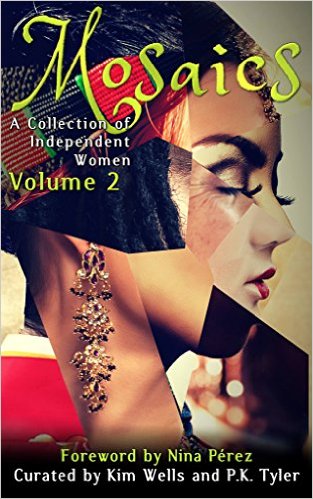
    I’m excited to present the work of another author from Mosaics: A Collection of Independent Women (Vol. 2)…Kimberly Fujioka.

    Kim has been writing since she was a child. She wrote her first novel while she was tossing Hostess Ho-Hos and Ding Dongs off the back of a dump truck at her uncle’s farm. The cows in the pasture all grouped around the dump truck overflowing with day old cakes. If farms were a microcosm of the world, there would be cows who follow and then there would be one who might be named Polaris who would crawl up the apple tree to reach the golden apples, the one who from the vantage point of old age could see the slaughter house in the distance. Kim knows the benefits of aging since she’s almost 60 and has finally started to take herself seriously as a poet.

    Kim has written and published book reviews, essays, and poetry, and she has published in print and online newspapers, magazines, literary journals and the anthology, To Japan with Love: A Travel Guide for the Connoisseur.

    Kim taught English (ESL) at the university level for 30 years in both the U.S. and in Japan. She wrote several nonfiction books on teaching that are on sale at Amazon. You can find Kim on social media at the following accounts: Book Review Blog, Twitter, and her personal blog. She offers one poem:

    The Glass Blower and Me

    There is a shape I am searching for,
    or is it a process?

    The outcome is always the same, and I ask
    “Is it love or art?”

    I’m thinking if that mountain village, north of Fujioka City in Central Japan,
    the glass blowers raise the long hollow metal rod to their greased lips
    and blow.

    The other end is immersed in blue fire.
    Those of us standing around cannot see the glass formation
    we are told is inside the stove’s belly,
    but we believe it’s there.

    We stand around the glass blower, who delicately twirls the hot, metal rod
    between his gloved fingers.

    We watch and wait for his masterpiece of glass to emerge from the oven, when
    he taps me on the shoulder,
    leans down to grease my lips, and lifts the rod
    up to my mouth.

    But I am too eager, sucking in more air than my lungs will hold.
    He steps back, moving the blow rod away from me.
    It’s noisy in this studio, so no one can speak over the roar of the fire.

    We communicate through our eyes.

    I look up into his eyes.
    He puts the metal rod to my mouth and I try again.
    This time I use the breath that is only mine.
    He places the rod in my hands and moves slowly toward the stove,
    peering in through the small window.
    Looking over his shoulder at me, he gives me the okay sign.
    I let my breath out slowly and steadily, then he cuts through the air
    when it’s time for me to stop.

    I don’t know what I’m doing, but he guides me through it.
    It’s only him—the glass blower—and me, and my desire.

    We enter the blue fire,
    unable to stop,
    even though I am afraid.

    Source:
    “Body, My House.” Pilgrimage Magazine 35.1 (2010): 40-41.

  • Mosaics Poet Profiles: Audrey T. Carroll

    Audrey T. Carroll is a Queens, NYC native whose obsessions include kittens, coffee, Supernatural, Buffy, and the Rooster Teeth community. Her work has been published or is forthcoming in Fiction International, So to Speak, Feminine Inquiry, the A3 Review, and others. Her poetry collection, Queen of Pentacles, is forthcoming from Choose the Sword Press. She can be found at http://audreytcarrollwrites.weebly.com and on Twitter. She offers two poems:

    Darling Daughter

    When they want to cleave your bark to read
    your rings, hack away at your outermost with
    steel    edges,    accuse    you    of   a   petticoat
    conspiracy that you are a part of because we
    are all a part of it from the age when we pass
    notes in our pastel bubble writings, then you
    tell them, dear child, of the female narrative
    not born of temptation & sin but of the
    blood of your blood singing out

                       from

                                 one generation to the next.

    Two Clowns

                   For Mr. & Mrs. J

    No stranger pair born
    than the head doctor
    and her ward
    Tragedy granting the doctor
    every reason to fall
    and with a ward so charming,
    How could she resist?
    Years of attempted murders
    both have survived
    switching which side of the gun
    each was on, who got
    the last laugh
    And that’s what today is all about:
    Laughter in the madness
    at the madness
    surrounded by enemies of enemies
    for a person who would
    kill or die for the other,
    laughing the whole way
    and her ward with the red
    smile, who mostly likes her
    Sometimes
    Never have such a perfect pair
    of clowns been joined
    To a future of many
    Successful plans
    Endless riches
    Smile upon smile
    And may you both
    Finally
    have that single thing
    you want most—
    Freedom to run the streets
    Freedom from the knight


    Sources:

    “Darling Daughter” originally published in So to Speak Journal.

    “Two Clowns” originally published in Crab Fat Magazine, Issue 5.

  • Mosaics Poet Profiles: Elizabeth S. Wolf

    Elizabeth S. Wolf lives in MA with her daughter and several pets. By day she works as a Metadata Librarian. Through years of interesting times, her catchphrase was “just another chapter for the book”.

    Many of Elizabeth’s poems and stories are inspired by events in the news or in her past. She writes because telling stories is how we make sense of our world, how we connect with our world, how we heal and how we celebrate. She writes poetry to find the sliver of truth within the overload of information.

    Elizabeth has published poems in several anthologies (Merrimac Mic: Gleanings from the First Year; Amherst Storybook Project; Mosaics: A Collection of Independent Women, Volume 1; The Best of Kindness: Origami Poems Project 2016; Merrimac Mic II: Going with the Floes). Elizabeth’s poetry has appeared in the online journals NewVerseNews and Scarlet Leaf Review and is forthcoming in Peregrine Journal. Some of her earlier poetry is archived in the Valley Women’s History Collaborative, a special collection of the UMass Amherst Libraries. Today she offers three poems:

    Dare.

    Take chances.
    Go to the wall,
    and again,
    and again:
    as a hobby,
    as a way of life,
    as an exemplar,
    as an apology,
    as a beacon,
    as a trust;
    as you must,
    as you must.

    This Is The Way

    This is the way
    the world ends: with an orgasmic sigh
    and a saxophone wail, with a howling dog
    and a gibbering monkey
    chanting their prayers, with
    whistling teapots falling silent
    and rustling leaves whispering
    “nevermore”, with lights and sirens
    flaring and lovers swearing
    at each other, with children reciting the alphabet
    backwards as their parents dance to
    displaced tunes, and the sky soars away
    as the Big Bang shatters into
    thousands of lingering whimpers.
    This is the way the world ends;
    please stand by.

    What If

    What if today
    there were no shootings.
    What if today, there were no
    beatings, even if dinner is
    late or cold. What if today
    everyone had enough dinner.
    What if today, those who call themselves
    lovers actually respected each other.
    What if today, children were
    seen and believed and
    treasured. What if today
    we greeted our neighbors.
    What if today
    is all the time we have;
    what if today
    is enough;
    what if.

    Sources:
    “Dare” originally published in Methuen Life, Nov 2014.

    “This Is The Way” originally published in Merrimac Mic: Gleanings from the first year, April 2015.

    “What If” originally published in Scarlet Leaf Review, March 2015, and reprinted in The Best of Kindness: Origami Poems Project 2016 Kindness Anthology

  • Mosaics Poet Profiles: Caroline M. Cao

    With the launch of Mosaics 2 on May 1, I’m continuing the April frivolity – more poet profiles! But this time, I’ll be sharing the work of my fellow Mosaics authors, from both volumes! The first poet in our series is Carol Cao.

    Caroline M. Cao, though Florida-born, considers herself a full-Houstonian spiritually. During her years at the University of Houston, she was a devoted staff writer and satirist of The Cougar Opinion Column and Cooglife magazine. She is a current TV/Movie reviewer for OutLoudCulture and champions review-writing as both a scholarly platform and artform. In the meantime, she’s writing poems, stories, and sci-fic space opera screenplays. Or she’s just swing dancing with the UH Lindy Hop Club. She offers two poems:


    On a Numb Brain

    a bloodstream too feeble
    dulling wits
    weary slug-fingers fidgeting,
    clawing tenderly on bedsheets and pillow.

    I heed the molecules
    of my sinking queen-sized mattress
    nullifying my will to take pleasures

    Kaguya at Leisure

    My dad among
    the surplus of fathers
    whispered the stories of the struggles of suitors
    spinning artificial silk
    plucking fragrant-less camellias
    carving Buddha’s Begging Bowl
    seeking to make her
    their new ming vase.

    Dad told it that way to the daughters’ bedsides
    “Kaguya was sad,” the dads said.
    What else was there?
    But the river-tears of Kaguya’s father
    with her mother rubbing his shoulders
    and him borrowing her handkerchief.

    Only I knew the
    part of the story
    where she bowed down
    on knees,
    worshipping the
    birds, beetles, bees
    neglecting the wooing
    of the princes and courtiers.

    The pear blossoms
    weren’t in season
    but ah well.
    she considered herself blessed
    that the blood Tsubakis
          weren’t in season
    as she buried her face
          into the lilies.

    That was before the era of her altars
    and the bedside stories.

    This was before she submitted
    to the moon delegation
    to ascend from Earth.

    When she resettled on the craters
    the moon glowed this portrait
    of her ephemeral bliss.

    Her lips appear the utter the overdue,
          “No. ”
    which were always muted by the floral screens
    of her earthly bamboo-palace.

    Even then,
    she does not look down
    on her suitors bows
    she pinches her nose
    at the Emperor’s shrines
    and its stale incense.

    She smiles at daughters
          who inquire
          “What about her?”


    Sources:

    “On a Numb Brain” originally published in The Aletheia Literary Magazine, Spring 2015

    “Kaguya at Leisure” originally published in Mosaics: A Collection of Independent Women

  • Launch Day is here!

    It’s here, it’s here, the release of Mosaics 2: A Collection of Independent Women!!! You can enjoy the book in print or Kindle, and the Kindle price for today is $0.99. All our proceeds go to The Pixel Project, so please consider supporting this anthology – the second installment in the Mosaics series. (Did you miss Mosaics 1? Check it out!)

    Mosaics 2 Cover

    From my initial submission in December through our launch today, this project has been an incredible collaboration. With the guidance of Kim Wells and Pavarti K. Tyler, I’ve created my Amazon Author Page and public Facebook page, managed a Rafflecopter giveaway, and connected with dozens of creative women. All pieces in the anthology went through two rounds of professional edits, and the feedback I received was empathetic, constructive, and encouraging. This is a project that helps women writers feel the impact of their public voice – in Facebook groups, among their colleagues, and in the wider market of writers and readers.

    Giveaway winners

    Congrats to Emily P, Katie L, and Wendy C who each won a free Kindle version of Mosaics 2!

    At tonight’s virtual launch party, I’ll be running another giveaway for a free Kindle version of another feminist anthology in which I was published, I Am Subject Stories: Women Awakening. Stop in and meet my fellow authors!

    Special thanks…

    To Kim and Pavarti for all their leadership and respect.

    To Jessica West for her enthusiastic editing!

    To Tim and JJ for their early readings of my essay.

    To the friends and colleagues who were able to review the advanced reader copy.

    And to all of you who follow this blog! As much as we writers like to imagine ourselves as beacons of solitary genius, working in seclusion, we write for our readers, for the collaborative audience who helps us to feel heard and valued.

    Now, go out and get a copy of Mosaics 2! And leave us a review on Amazon or Goodreads!

  • April Poet Profiles: Rhoda Monihan

    Rhoda Monihan is an atheist poet and writer and has most of her poems on the PoetrySoup website. They span from being about religion, politics, and technology to being about science, evolution, and WW II. She believes that all people are of equal inherent worth and understands humanism to give the best view of life that can be supposed. She believes in evolution, as she has found it of great help to her as a young teen when she read Darwin having had a few tragedies in her life. She has a number of disabilities, but the physical one is Cerebral Palsy. In her spare time she likes reading, watching DVDs, and going to the cinema. She offers this poem:

    I Wish I Was a Wandering Tree

    I wish I was a wandering tree because then I’d make lots of relationships. The sun, so startling with glamour, the sky, just a wee distance away, with chlorophyll and the weather, my partner. He’s all around me and so very affective. I am happy when he’s bright, and his cold is my down. I would bring the sun down to earth by respecting his beams and running with all his memes until he was on my side, in my living room relaxation time which would be energised by solar power. I’d analyse the clouds for precipitation causation and I’d multiply the chlorophyll found inside plants and inject the extra amount into us humans to change all skin colour to green. Then we’d know just normally and not just when we are in education classes that we’re all related to nature, and that how we interact with it determines each of our futures, not god or imagination. And maybe the chlorophyll would even make us fly!

  • April Poet Profiles: Travis Lau

    Travis Lau is a Franklin/Fontaine doctoral candidate at the University of Pennsylvania Department of English. His research interests include eighteenth- and nineteenth-century British literature, the history and theory of the novel, the history of medicine, disability studies, body studies, and gender and sexuality studies. His dissertation, tentatively titled “Prophylactic Fictions: Immunity and Biosecurity,” explores the British literary and cultural history of immunity and vaccination beginning in the eighteenth century. His academic writing has been published in Journal of Homosexuality, Romantic Circles, and English Language Notes (forthcoming). His creative writing has appeared in Atomic, Feminine Inquiry, Wordgathering, Assaracus, Rogue Agent, and QDA: A Queer Disability Anthology (Handtype Press, 2015). You can read more of his work here. He offers two poems:

    Intended

    “I seem to myself, as in a
    dream, 
    An accidental guest in this dreadful body.”
    –Anna Akhmatova

    A scan with closed
    eyes bears witness
    to lines of knots,
    ropes for counting
    the matter out of
    place – a body and
    its discontents,
    dreadful as only
    fathomable in the
    ligatures of a dream.
    Accidental, she once
    did call it, a matter of
    error with no trial
    or the sin of generation:
    what her grandmother
    paid for with queer bones
    and left for me to clear the
    debt. Yet I remain the
    interest, what remains
    of transits (of genes, of
    prayers) unmoving like
    a bind that cannot be
    breathed through.
    So to be is to overstay,
    to be the guest who
    refuses every comfort
    to become host – no
    longer accident but
    intent.

    Disorientation

    How it is
    to live askew –

    but a step
    away from awry,

    the ruthless tui na
    of the world,

    other to me, hard
    upon pressure points

    until I am left
    impressed:

    the residue of
    disorientation

    in space that
    holds itself

    hard against
    me despite

    its songs
    of innocence.

  • April Poet Profiles: Andres Rojas

    I am honored to present the work of my friend Andres Rojas. Andres  was born in Cuba and came to the U.S. at age 13. He holds an M.F.A. and a J.D. from the University of Florida, and his poems have most recently appeared or are forthcoming in Barrow Street, Colorado Review, Massachusetts Review, New England Review, and Notre Dame Review. Andres is also the poetry editor for Compose, an online journal.

    Andres reads a lot, when he is not spending time with Melinda, his wife of 23 years. They like to revisit their favorite spots (New Orleans, Savannah, Charleston, and St. Augustine);  during spring and summer, they go for walks on the local beaches. For the past couple of years, Andres has become addicted to MOOCS, and has completed about 15 of them—varying on topics from cosmology to history to poetry. He loves to hike. He has recently completed all of the Appalachian Trail in Georgia and is approximately 45 miles into North Carolina.

    Andres wrote his first poem at age 13, emulating his father (who didn’t really like that first poem). He wrote song lyrics in high school, and took creative writing courses in college, intending to write fiction. He wrote the poems required for his course, and he is still writing poetry 30 years later.

    Though Andres loves creative activities (acting, playing the guitar, singing in a band, and writing fiction and nonfiction), he is drawn most to poetry. He says, “I love to work towards the pleasures of writing poetry, which I vaguely define as striving for elegance, precision, discovery, and catharsis.” He believes in the power of poetry to enhance empathy and awareness. Poetry challenges a reader’s intellect and emotions, preparing them for other difficulties—whether on the page or in person. His favorites include Eliot, Shakespeare, Emily Dickinson, Wallace Stevens, Adrienne Rich, Carolyn Forche, Eduardo C. Corral, Ada Limon, Natalie Diaz,  and Ocean Vuong.

    Andres was a finalist for this year’s Andres Montoya Poetry Prize. In 2017, his essay on Latino/a poetics and immigrant identity will be coming out as part of a University of New Mexico anthology. You can find more of Andres’s work at his blog. Today he offers three poems:

    ONE

    Loss isn’t hard.
    It comes uncalled,
    a side effect

    like chills or thirst,
    makes room for more,
    wants little else

    but what is lost,
    what artifice
    burns to restore,

    can’t fail to try.
    Write them, again:
    door keys, notebooks,

    that first time, hours
    poorly spent, words
    fine without me.

    My mother’s watch.
    Her last-worn dress.
    Your voice. Your hands
    that I love. You.

    HEADWATERS
              Chattahoochee Gap Spring

    Breached in stone,
    fig-leafed with lichen,

    a baptismal font
    enough to keep its share

    of future skies — how new,
    exactly, this trickle? The Adam

    and Eve orchids too
    bespeak something

    other, as the bird skull
    alit on deer droppings,

    as — miles downstream,
    hours back — the tubes

    on the river, asters
    alkene and slick: ancient,

    if not older than themselves,
    rarer than stars, yes, and ordinary.

    OSCEOLA FOREST
              …damit mehr Licht hineinkomme

    Night is more than what longleaf pines
    have gathered here, voids leaning in
    as for a look, the sky not their opposite

    but something else: of stars,
    light may abide longest.

    June brings out few fireflies,
    three, four per hour, if that. One
    lights my chest, my head,

    all I can see now, this spark
    in so much forest, calling.

    I close my eyes to absence older than stars.
    They and the fireflies still shine, I’m sure —
    I, who walked four hours to them

    knowing what light can mean
    even to one who means nothing to it.

    Sources:
    “One” originally in Luna Luna
    “Headwaters” originally published in Colorado Review
    “Osceola Forest” originally in Bridge Eight

Emily K. Michael

Emily K. Michael is a blind poet, musician, and writing instructor. She serves as the poetry editor for Wordgathering at Syracuse University. She is also a poetry mentor in AWP’s Writer to Writer program. Her work focuses on music, embodiment, teaching, and ecology. Emily is passionate about birds, medieval history, singing, and guide dogs.

Pre-order My New Book

Purchase Neoteny

Email Subscription

Enter your email address to subscribe to On the Blink and receive new posts by email.

Watch my TEDx Talk!

What I’m Reading