• Appearing at JaxbyJax 2016!

    Mark your calendars for November 12, 2016! I’ll be reading poetry at the JaxbyJax Literary Festival!

    JaxbyJax is a unique event that stages local writers all over Riverside. Whether you want to visit a pub, hair salon, coffeeshop, or tattoo parlor, you’re likely to find a pair or trio of Jacksonville writers reading their work. After a student showcase at 2PM, readings begin at 3PM, and writers trade off at the half-hour mark. Last year, I had the pleasure of reading at the estimable Cool Moose Cafe with Sohrab Homi Fracis. This year, I’ll be reading at Cool Moose again with my friend and fellow poet Andy Rojas! You may remember Andy from my April Poet Profile.

    Visit the JaxbyJax website for more information. Read the list of venues, author bios, and event guide!

  • October Interview: Love, Work, Play, and Pray Like Everybody Else

    Welcome to October, and welcome to Blindness Awareness Month! On the Blink is celebrating blindness with a second round of October Interviews. In the coming days, you’ll hear from blind friends and colleagues as they describe their passions, their challenges, and their perspectives on disability.

    Our first October conversation features Katherine Schneider, Ph.D., a retired clinical psychologist living in Eau Claire, WI with her ninth Seeing Eye dog. Katherine has published a memoir To the Left of Inspiration: Adventures in Living with Disabilities, a children’s book Your Treasure Hunt: Disabilities and Finding Your Gold, and a book for seniors, half of whom will develop disabilities, Occupying Aging: Delights, Disabilities and Daily Life. She originated the Schneider Family Book Awards for children’s books with disability content through the American Library Association and an award for superior journalism about disability issues through the Walter Cronkite School of Journalism at Arizona State University.

    Locally, she started the Access Eau Claire fund through the Eau Claire Community Foundation to help non-profit organizations work toward full inclusion of people with disabilities. She’s a passionate advocate for access for all to the good things of life. Subscribe to her blog for details.

    What is the most consistent challenge or frustration you experience with your blindness? How do you handle it? 

    I’d say information access is the biggest problem. I handle it by trying to learn and use every technology possible, asking early and often for what I need and advocating for better access to information whenever and wherever I can.

    What resources have helped you to handle your blindness best, either in everyday matters or in moments of crisis?

    Information from many sources about how others have dealt with a similar problem is helpful as are good friends who listen. When it’s a crisis, prayer and friends who just show up help the most.

    What would you say is the most harmful or annoying belief that people have about blindness?  How would you change this belief?

    I think the most harmful belief is that we are so different from them that they stay away. Yes I may do some things differently, but I want to love, work, play and pray like everybody else. I reach out by getting involved in community activities and I do disability education in schools, university classes or wherever I can find an audience.

    What is a book that you could read over and over again? Why do you feel this way about it?

    I read very few books over and over; so many books, so little time. If I had to name one, it would be the Psalms from the Bible.

    What book, person, or perspective makes you feel most centered?

    I’m a backrow liberal Catholic Christian with ecumenical leanings.

    What is one dream you hope to accomplish in the next 10 years?

    I’d like to read the Bible from cover to cover, but am only in Leviticus after several gallant efforts. I’d also like to become a member of the 50 year club at Seeing Eye; I’ve now had Seeing Eye dogs for 43 years.

    What topics do sighted (or blind) interviewers usually ask you about?

    They usually ask about the guide dog, the technology, is access getting better and what’s your next book going to be about.

    What topics would you prefer to discuss?

    I’d also like to discuss what other people can do to make access to the good things of life better for those with various disabilities.

    *  *  *

    Keep celebrating Disability Awareness with On the Blink! My call for interviewees has been widely shared and answered, so we’ve got more fascinating perspectives on the way!

  • Poetry as Activism, The Rhetoric of Empathy, and The Breaking of Beliefs: My interview with Primal School

    I am honored to be featured on Hannah Lee Jones’s fabulous poetry blog, Primal School. Her blog is designed as a place to discuss poetry outside the academy, to go back to basics and understand what makes a poem tick. In this interview, she asked me to describe my motivation and process for “A Phenomenology of Blindness,” which was published by Rogue Agent this summer.

    About the interview, Hannah says:

    [Emily K. Michael’s] poem ‘A Phenomenology of Blindness’ is a lesson not just in poetic craft but also how to talk about disability: ‘There’s a sense with the average non-disabled person that we should try to minimize or hide our disabilities — as if their discomfort is our discomfort. That’s another reason I write as a blind poet; I want people to know that I’m bringing blindness forward. I’m not ashamed. It’s a part of who I am. It’s something that belongs in poetry — not as a novelty but as a reality.’ Read, learn, and if so moved, please share widely — Emily’s work is vital.

    Read the full interview here.

  • Sacred Space Interview: Calling for Balance with Faith, Hope, and Love

    We’re starting the week off right with a luminous interview from Elizabeth L. Sammons. Elizabeth’s interview bridges the Sacred Space series and the October Interview series—opening a dialogue about faith and disability that is rich and rewarding. I know you’ll enjoy this extended conversation!

    Elizabeth L. Sammons, age 50, is a Program Administrator with Ohio’s disability vocational services: Opportunities for Ohioans with Disabilities. De facto she conducts extensive research, outreach and writing for their agency statewide including both blindness and other disabilities. In the past, she has taught English serving in Peace Corps in Hungary, represented our culture in the then Soviet Union on a cultural exchange program, and served as interpreter for cross-cultural, faith and government meetings.
    She enjoys creative writing, both fiction and nonfiction; paid and unpaid community interpreting using Russian and French fluency; keeping track of friends locally and around the world, particularly as touches the faith experience.

    How would you describe your vision or blindness? Is it congenital or has it developed recently?

    I was born with cataracts on both lenses; operations before school age restored vision in one eye to encompass color and basic shapes. I use Braille and audio for my reading and writing needs.

    Do you use a cane, guide dog, or other mobility aid to get around? Why have you chosen this aid?

    Always a white cane. It’s true that a cane won’t show me directly to a door or elevator, but nor do I need to feed, water or clean up after him; his name is “Stickie.” Nor do I have to tell his funny name to nosey strangers, and I feel secure with him swinging over the pavement to guide my path.

    Are you active on social media? If so, share any of your links that you’d like my readers to know about:

    I lack the time and patience to delve into any social media except what I call my “literary scrimmage site,” which is my blog. I invite you to visit for a mixture of poetry, memoir, humor and philosophy written over the past 4 years. I utilize NFB Newsline for much of my current events reading.

    What is the most consistent challenge or frustration you experience with your blindness? How do you handle it?

    A lot of people think that someone “afflicted” as many people say, with a disability, faces this disability as the major difficulty in life. In my case, this is not true. While I readily admit the inconvenience of living life in a physical world not labeled, leveled or linked with nonsighted people in mind, the far greater challenge for me is to balance the idealism of a perfect world and spirit that I have held since childhood, with the day-to-day “slings and arrows of outrageous fortune” encountered by us all. I think that many middle-ability, mid-intelligence, mid-income, mid-life people have come to a balance on this question, accepting the monotony or the petty aggravations pertaining to most days in our lives as simply the things that happen… the things to expect. Most likely it is my desire not to compromise which has given me the label from others of being “passionate,” and my internal label, “disquieted by the act of living.” Regarding how I handle these dissonances, see next question.

    What resources have helped you to handle your blindness best, either in everyday matters or in moments of crisis?

    Since I’m thinking about music, I will give a quick point to this question with the song title “I Get by with a Little Help from my Friends.”
    Words and music are a very present help in time of trouble. I never worked to develop this, but I have the idiosyncrasy of coming up with songs containing a certain word. For example, as soon as you say the word “Bridge,” I might think of the phrase/song “Bridge over Troubled Water,” and also “London Bridge is Falling Down” or even “Shall we Gather at the River” since the word “Bridge” converts to a picture of “River” in my mental gaze. This word association with music often comforts me and just the right lyrics, both secular and sacred, come to mind for me, a blessing not called for consciously.

    What would you say is the most harmful or annoying belief that people have about blindness?  How would you change this belief?

    People who inhabit able body’s under-estimate the abilities of people with disabilities including blindness. When able-bodied people are in a role of authority (employer, teacher, counselor, parent, mentor etc.) in the life of someone with bodily challenges, that person unfortunately often conforms to that belief without even examining the life he or she could live instead. I use humor in responding at times “I have half a century of experience on this… you don’t even have a day, so why do you think I can’t do such and such?” Another response I gave especially when I was younger was “OK, just give me a chance and let me show you how I can’t.”

    In faith communities, a grave error people can make is viewing a congregation member who is nonsighted or with any disability as the object of one-way charity. It is an empowering act when that person can serve on congregational council, help in child care or teaching, pass out bulletins, offer artwork, interpret for non-English speakers, or any other role that frames the person’s ability and communal presence.

    What is a book that you could read over and over again? Why do you feel this way about it?

    Ah, there are so many books! If I had one and only one book, it would need to be the Bible, not only because of faith, but for its mix of history, poetry, philosophy and voices over centuries of compilation.  . If you take mercy on me and allow me a second book, I suppose it would need to be a form of Wikipedia, because my curiosity is never satisfied.

    What book, person, or perspective makes you feel most centered?

    I came across Betty Eadie’s Embraced by the Light during one of the hardest times in my life. Her perspective, gained through two out-of-body experiences and enriched by her Native American heritage, indicates that we are living as spirits in this world through the bodies we inhabit. Our purpose and connections are things that we cannot see in larger perspective while we walk on this earth, but we must be conscious of our neighbors, our influence and our joyful duty to illustrate love in everything we do and in every choice we make. While I fall extremely short of this faith philosophy, I agree with Carl Schurz: “Ideals are like stars; you will not succeed in touching them with your hands. But like the seafaring man on the desert of waters, you choose them as your guides, and following them you will reach your destiny.”

    What is one dream you hope to accomplish in the next 10 years?

    I have written one secular book and am now researching and writing a second novel, which is a faith novel based on the life of Stephen, (Christianity’s first martyr, Acts 6-7.) I hope to finish this novel and to find a non-self-publishing opportunity for both these fruits of my mind. The work of my pen is the only mental fruit that I can leave when I depart our era, and I pray that anyone interested or in need of these writings will find them at the right time, both during my time on earth and afterwards. For a reason I cannot rationalize, I feel a profound peace and assurance that this prayer will be fulfilled.

    What topics do sighted (or blind) interviewers usually ask you about?

    Many people are intrigued that I speak 3 fluent languages and an additional 3-4 languages with reasonable competence. I love the tongues, tones and trumpets of faith as they play out in various cultures. Our journey of faith is necessarily as much a cultural experience as it is a spiritual walk, and it is fascinating to me to see the translation of faith in many ways of singing, means of accepting messages, houses of worship and foods/drinks of sharing. To me, a language is like a code-cracking puzzle or joyful equation to solve. I feel deeply moved and blessed that I have had the chance to speak with so many people who without my taking the effort to walk into their linguistic territory, I could never have known.

    What topics would you prefer to discuss?

    While it brings me pain each day to walk along the imperfection of what we call “life,” I believe that the best is coming when my road ends on earth. Some close friends, particularly those raised in Communist countries, have asked me “Why does someone of your intellect believe in God?” On one hand, I can give an easy answer that even as they were raised atheist with little caring about matters of faith, I do not remember a single meal growing up when we did not open with prayer or a week when we did not dwell on faith questions together in my family. Thus both of us, the atheist and myself, were imprinted to travel certain mental and spiritual paths.
    But that answer is incomplete. Beyond cultural context, while I understand many arguments pointing to God’s nonexistence, I equally comprehend those in favor of God, and the faith experience is my choice between the two. It is a decision that will do only good and no harm in my life, and I wish my post-Communist friends the hope that I lean on.

    If I were speaking to a disability audience I might add that as a blind person, all my life, I have had to rely on those with sight to tell me many things about this world that otherwise I would not know… soaring of a gull vs. flapping of a sparrow… copper gutters turned tingly green with age… the smile of Mona Lisa vs. the grin of a Cheshire cat. If I lived only by what I knew through my own experience or intellect, my life would be limited indeed. If I stuck to my own experience, my world would be so small. But on the good days, borrowing another’s lens, I sometimes think that I can see nearly to heaven.

    Do you believe in a God, gods, or other spiritual forces? If so, what name(s) does your spiritual force have? Where does the name come from?

    While I simply say “God” and “Jesus Christ,” I believe as our Islamic brethren say that God has a thousand names… and perhaps more than that. Regarding other spiritual forces, unfortunately there are also evil forces in both human activities and in divine struggle.

    Sum up your faith in three words. Why did you choose these words?

    Faith, Hope and Love. This reply may sound pert, but if you think about it, what elements beyond this do you need in pursuing a meaningful life? (These words come together at the end of I Corinthians Chapter 13 in the New Testament, also called the “Love Chapter” for those who wish to read further.)

    How do you practice your faith? What kinds of prayer, texts, service, or other rituals do you use?

    I find prayer, song and recitation in a group context of great meaning. These acts, along with communion, make me realize that I am connected with not just one congregation, but generations, centuries and even millennia of believers of completely diverse cultural backgrounds, but who anchor their souls and spirits in the faith, hope and love in which I desire to live out in my own little life and generation.

    Describe a moment when you knew that this faith was right for you.

    Though I hold rather traditional Christian beliefs and was raised in a conservative background, I do not try to actively convert or evangelize. However, when friends and family have been in crisis, it is the well of my faith that has usually provided the insights I need to be of comfort or of meaningful presence. This included a recent death experience, the passing of my best friend. “The worst is behind you; everything ahead is good!” I told her…not “my” words, but words that came to me along the way to the hospital.
    When I take the time to pray, ever so quickly, when I am in a conflict or a situation where I am contemplating a less loving or more destructive path than I could take, there has never been one time when some idea, person, or calm did not come to my rescue. My problem is taking that time and effort to call out for help.

    Describe a moment when you felt that your god was real, that your faith was making a difference in your life.

    It’s difficult for me to depict a single miracle moment in answering this question. However, I can safely say that the level of my awareness of God and his hand in my life is directly proportional to the difficulty of the situation. The more difficult the situation, the closer I feel my spirit to be linked with higher forces, as long as I take the time to ask for help.

    Have you had any spiritual mentors or teachers? If so, describe their role in your life. How did they help you find your faith?

    I have met far more people than I deserve along my half century of life who have shown me levels of love, respect, kindness and belief that were completely unmerited in the situation. One who comes to mind is a Jewish refugee whom I met in the USA at age 80, when he immigrated here with his children and grandchildren. He tutored me from an elementary level of Russian into exploration of the Russian great writers, and along the way we became friends. Always in departing from him, I felt a great awareness and love that wrapped my spirit like a blanket. I have tried to repay some of his generosity in serving other immigrants here and in depicting him in disguised form as a small but pivotal force in my first novel.

    Where and when do you feel most in tune with your faith or spirituality?

    The congregational experiences I mentioned above are one way, but another is when I go into nature, particularly when I am alone. No matter what my mood, the ocean speaks to me as no other force can.

    What is one misconception that others have expressed about your faith? How would you correct it?

    One can be a deeply believing Christian, even a conservative Christian, without being narrow-minded or intolerant of others as today’s media seems increasingly prone to depict. We can define the rights and wrongs that direct our spiritual walk without enforcing them on others. The example of how we live and relate to our neighbor is a far more vivid “Bible” than what most people will ever read.

    Assign some “spiritual homework” for our readers. What is one practice, prayer, or lesson you’d like to share?

    When I get into my blackest mood, I sometimes assign myself the exercise of taking one hundred breaths and with each one, thinking of something I am grateful for. It can be anything – as vast as the universe or as small and funny as my cat’s husky voice when he wakes up and makes me laugh. After the hundred breaths, I cannot help laughing and realizing that things may be in chaos, but that I am better off than I was feeling. Try it at least once and you’ll always breathe easier.
  • Sacred Space Interview: God Is the Beauty in All Things

    Kathy, age 59, is a retired radiologic technologist from Jacksonville, FL. She loves reading, cooking, gardening, doing crafts of all kinds, and caring for her family. Today she is speaking with On the Blink about her Catholic faith.

    Do you believe in a God, gods, or other spiritual forces? If so, what name(s) does your spiritual force have? Where does the name come from?

    Yes, I strongly believe in God the Father, Jesus God the Son and God the Holy Spirit.
    These names have always been a part of my life since I am a cradle Roman Catholic.
    I come from a long family history of Catholics.

    Sum up your faith in three words. Why did you choose these words?

    Love God always and put Him first in all things. Keep the holy commandments.

    How do you practice your faith? What kinds of prayer, texts, service, or other rituals do you use?

    Roman Catholicism is a religion of sacred rituals, sacraments and time honored traditions. I keep the holy commandments, I keep the laws of my faith, honor holy days with special services and fasting.  I attend Mass, pray daily and pray the rosary. I read Scripture from the New American Bible.

    Describe a moment when you knew that this faith was right for you.

    My faith is how I was raised and I never thought to question if it was right for me. I will always be Roman Catholic. It’s a deep part of my being. It fulfills me in a way that is indescribable and brings comfort to my soul.

    Describe a moment when you felt that God was real, that your faith was making a difference in your life.

    My God has always been real to me. I feel His presence in my everyday life and especially during dark times. He is my joy during happy times. During life crises when I needed to make difficult decisions, my prayers were answered. These answers were defining moments for me personally.

    Have you had any spiritual mentors or teachers? If so, describe their role in your life. How did they help you find your faith?

    I have found support and guidance in the elders of our family. Those whose faith was so much stronger. They were my spiritual guides. I married a man of the same faith and all of his family were Catholic. Two relatives were priests so this Catholic environment has been very real and supportive from day one.

    Where and when do you feel most in tune with your faith or spirituality?

    God is everywhere—in the beauty of children, nature and all things. Celebrating mass, receiving the Eucharist (the body of Christ) often. Holy days such as Easter and Christmas is a very intensely spiritual time for me. Easter is the foundation upon which our faith is built.

    What is one misconception that others have expressed about your faith? How would you correct it?

    A common misconception is our love and honor for the Blessed Mother, Mary mother of Jesus. We do not worship Mary but implore for her intercession. As a son we believe that Jesus would do everything His mother asks. Another confusion is the many statues we choose to have in our churches and homes. Catholics are not idol worshipers, but these symbols remind us of holy figures. We need not ask for intercession in prayer, but it can be part of our faith life.

    Assign some “spiritual homework” for our readers. What is one practice, prayer, or lesson you’d like to share?

    Seek and examine to find a truth for yourself and a place or way of peace, love and worship. Respect all life from conception to the natural end. including yours. Be happy with your life and know each life is a worthy gift. Be thankful every day.

  • Sacred Space Interview: Live By Doing

    Welcome to the first of my Sacred Space Interviews! Today, I’m honored to present my conversation with Elaine.

    Elaine, age 65, is a retired teacher living in Jacksonville, FL. She describes herself as a lifelong learner with a passion for meditation and travel. She speaks in today’s interview about the beliefs and practices of her Jewish faith.

    Do you believe in a spiritual force or forces? If so, what name(s) does your spiritual force have? Where does the name come from?

    I believe in one G-d as my spiritual force.  G-d’s name should never be used in vein so one speaks of G-d with words such as:  Adonai (“My Lords”),  HaShem, and many other words. Adon (singular) is found in the Tanakh, which has the Five Books of Moses, the Prophets and the Writings.

    Sum up your faith in three words. Why did you choose these words?

    “Live by doing.” Judaism focuses on one’s actions, one’s belief in following G-d’s laws in their daily life.

    How do you practice your faith? What kinds of prayer, texts, service, or other rituals do you use?


    Judaism is deeply grounded by rituals and religious observances. These traditions found in Judaism are intertwined in the framework of the commandments as well as the rabbinical laws and traditions. The Jewish religion recognizes significant occasions in a person’s life.  Specific rituals use specific prayers and traditions to recognize these occasions such as birth, bar/bat mitzvah, marriage, death.

    Describe a moment when you knew that this faith was right for you.

    I was brought up in a Jewish home and knew no other faith.  When experiencing all the traditional rituals throughout my life, attending services in a Conservative Synagogue and attending Religious School, it became my way of life.

    Describe a moment when you felt that G-d was real, that your faith was making a difference in your life.

     
    I feel comfort knowing that when I am in a difficult situation or in a good place, I am able to believe G-d is always with me.

    Have you had any spiritual mentors or teachers? If so, describe their role in your life. How did they help you find your faith?

     
    The Rabbis from my many congregations that I have been affiliated with have been my spiritual teachers.  I enjoy learning each of their philosophies and their beliefs on Judaism. My Judaism is deep rooted, but I do believe I can expand my knowledge of the faith.

    Where and when do you feel most in tune with your faith or spirituality?


    At home, in synagogue, around my family celebrating Jewish rituals and traditions

    What is one misconception that others have expressed about your faith?  How would you correct it?

    Many people do not understand why the Jewish people do not believe in Jesus.  One needs to explain that we do believe Jesus was the son of G-d but believe G-d is our spiritual force.

    Assign some “spiritual homework” for our readers.

    Reflect upon who you are, who you could be and who you should be. How are you living up to the image of who you could be by your actions.

    What is one practice, prayer, or lesson you’d like to share?

    Think about your family, work, love life, social life, community, spiritual and religious life and make a list of the ways you are blessed.

    * * *

    I am still seeking participants for this series. If you would like to discuss your spiritual practice, please contact me here.

  • A Day in the Life

    Today an instructor I’ve never met before walked into our shared office. We had the following exchange.

    Colleague: Hello. You teach here?

    Me: Good morning. Yes. I teach writing.

    Colleague: And you’re blind?

    Me: Yes.

    Colleague: So…do you have any assistance in the classroom?

    Me: No, not really.

    Colleague: Wow, that’s just incredible! I really admire you!

    Me: …

    Colleague: I really admire how you don’t let blindness get in your way.

    Me: … *looks for the exit*

    Despite the fact that the colleague is using words like “admire” and “incredible,” I won’t be pinning this exchange on my wall of treasured compliments. Perhaps I sound churlish or ungrateful, so let me explain why I, and other disabled people, don’t enjoy this kind of attention.

    As a teacher of effective communication, I am bothered by this scenario. The colleague expresses admiration as a consequence of my exceptionalism. She assumes that the default position of disability is ineptitude. She is surprised, and thus excited, to learn about a competent and independent blind teacher precisely because she does not consider the competent blind person the norm. In her worldview, all disabled people are marked by the perpetual need for help.

    Holding this worldview does not mean she is a nasty, terrible, or unpleasant person. In fact, she seems to be making an effort to converse and be courteous. She cannot help the fact that her world is populated by stories of disability as disaster. She can only try to adopt a new worldview, and perhaps she needs time for such an adoption.

    But the change won’t occur if I keep silent. So, let’s adjust her logic.

    Here’s the other problem with her line of reasoning: it makes no room for me as a professional or colleague. She compliments me on my ability to defy her stereotypes, but she does not actually know anything about my teaching style. She says it’s incredible that I can teach independently and that she admires me. But she hasn’t seen me in the classroom. How does she know I’m any good? I could be terrible! I could be a train wreck. She is congratulating me for living a life other than the one prescribed by the tragic stories of disability—not for making a difference in the lives of students, as all teachers seek to do.

    This dialogue got me thinking about how she must see my life, how she thinks I live each day. So I present you now with two agendas.

    A Day in the Life of a Blind Person, as Imagined by Too Many Sighted People:

    • Wake up. Grope for cell phone or extremely large alarm clock. Attempt to turn it off.
    • Enjoy a few blissful moments with my eyes closed.
    • Open my eyes and remember I’m blind.
    • Shed 3-5 tears. Wipe them away.
    • Realize that I can’t see the glittering tears rolling down my face. They glitter with all the possibilities I will never accomplish. Shed 6-10 more.
      • Recommended for Weekends: Shed 6-8 initial tears because weekends are more social and I’m disabled. So I won’t be doing any socializing.
    • Get out of bed. Feel my way to the kitchen.
    • Prepare special Blind Person’s Breakfast: all finger food, nothing messy. Nothing that requires excessive chewing.  No coffee. Tired of spooning in salt instead of sugar. Caffeine withdrawal headache.
    • Get dressed in mismatched sweatpants or other lounge wear. Run fingers through hair. No makeup. Sunglasses.
    • Find favorite chair—any chair—in living room. Sit.
    • Spend the next 3-5 hours contemplating how great life would be if I could see things. Then have lunch. All finger food. No mess.
    • Rinse and repeat until dinner.

    A Day in the Life of One Blind Person, as Planned by Me

    • Wake up, Press snooze button. Wake up again.
    • Take dog outside, bring him in, feed him.
    • Do short yoga routine (5-10 minutes, 4-6 poses, I’d like to learn a few more).
    • Eat breakfast: a KIND bar and a string cheese, neither of which is messy. I choose this breakfast because it’s quick, and I don’t have to think about it. I’ll get a cappuccino at work.
    • Check personal emails.
    • Get dressed in outfit I’ve laid out the night before. It’s professional attire: a skirt and blouse or a nice dress.
    • Part hair and put product in. Scrunch curls. Moisturize face. Put on makeup. Put in earrings. Put on braille watch.
    • Take dog outside again. Listen to birds. Wish I’d brought my phone outside so I could record them.
    • Pack bag for work—dog’s lunch, my lunch, graded assignments, books, laptop.
    • Go to work. Teach classes. Challenge students.
    • Come home. Have dinner with family or friends. Plug social appointments into calendar for weekend.

    What’s that, colleague? My daily agenda looks like yours? Wild! I wonder why that is…

  • “Sketching the Rose” in the September issue of Wordgathering!

    Today the September issue of Wordgathering is live, and my essay, ‘Sketching the Rose,” is the sole piece in the Music section! Here’s how the piece begins:

    Summer can be a slow season for my barbershop chorus. We enter regional competition in April, and if our scores are good enough, we’ll compete on the international stage in October of the following year. Because we have eighteen months to perfect our competition music, we spend the summer months expanding our repertoire and just having fun–which is barbershop code for learning “tags.”

    Tags are the last few lines of a song, stretched out and embellished with lush harmonies. At our regional competitions, the hotel corridors are filled with quartets singing tags. Established quartets and pickup quartets–groups that have competed for years and foursomes who have just met by the elevator. Because tags are short and catchy, most people teach and learn them by ear.

    When we see “tag singing” on the rehearsal agenda, my fellow singers and I find our respective sections on the risers: lead, bass, baritone, and tenor. Even in an all-female ensemble, we still use the traditional part names from men’s barbershop–we can’t help that the male tradition was established first. As I step up next to the other baritones, our section managers form a quartet in front.

    Read the entire piece here.

  • Announcing Sacred Space, a new interview series at On the Blink!

    I’m delighted to announce the launch of a new series of interviews here at On the Blink. The series is called Sacred Space, and it will feature short interviews with people about their spirituality.

    I was inspired to create this series for several reasons, but I can trace bright lines of inspiration to two figures in particular: the former Lord Rabbi Jonathan Sacks and the Jewish-Buddhist teacher Sylvia Boorstein.

    In his On Being interview with Krista Tippett, Rabbi Sacks emphasized the need to honor difference across religious practices. Rather than insisting that everyone conform to our beliefs, Sacks suggested that we take the time to learn the beliefs, songs, and stories of other religions—even if we don’t choose to adopt them. He suggested that our God lives in these differences, in the rare and surprising moments of connection we establish through empathy and trust. So this series will strive to bring such differente voices forward.

    Sylvia Boorstein’s wisdom also came through her On Being interview. Dr. Boorstein says that developing a spiritual practice doesn’t require time apart from our daily lives: “Spirituality doesn’t look like sitting down and meditating. Spirituality looks like folding the towels in a sweet way and talking kindly to the people in the family even though you’ve had a long day.” She emphasizes the need for a spirituality that is expressed through everything else in our lives, that hums along beside us in all we do.

    My Sacred Space interviews will attempt to honor difference and bring spiritual practice to the center of conversation. Faith and spirituality are not all we will talk about on this blog, but they are moving toward the center—as all important commitments in our lives must.

    If you would like to share the stories of your faith and spirituality with me, just send me a message through the contact form below. I am excited to begin this series with all of you!

    ← Back

    Thank you for your response. ✨

  • “Inside Jokes” published at The Fem!

    Today starts a new semester! And the best way to ring in a beginning or ending is with poetry!

    So it’s a good thing that my poem “Inside Jokes” was published at The Fem on this day. Read and enjoy! Happy Monday!

  • Honorable Mention in The Hopper’s Prize for Young Poets!

    In June, I entered The Hopper‘s Prize for Young Poets. You remember The Hopper, the Vermont-based ecologically minded magazine that published one of my essays in May?  This contest called for a chapbook, a collection of 20-50 poems by a “young poet” (under 35) who had never published a collection before. So I shuffled and re-shuffled my poems, read them to myself, read them with friends, and sent them off!

    Well, my manuscript, Natural Compliance, won Honorable Mention (3rd place) in this contest! I’m incredibly excited by such a distinction, and I’m quite proud of my little manuscript. Because The Hopper is so awesome, they wanted to profile me on their website and include a poem from the collection. Their profile features my poem “Kiwano,” hitherto unseen on the wilds of the Internet!

    Here is their profile on me and my collection.

    I want to thank the friends who helped me create and finalize this collection. You know who you are. We spent hours hunched over coffeeshop tables working and reworking these poems. You read the collection in one fell swoop to soothe my insecurities. You cheered me on. You told me I was worth it, whether I won or lost.

    My friends, my readers, you are my blessing.

  • A little avian poem in a brand new journal!

    Today marks the launch of The Deaf Poets Society, a literary journal that features the work of disabled writers. And I’m honored to announce that my poem “Trading Threes” is on this first flight.

    Read and listen to the poem here.

    This poem is a tribute to the glorious cardinals who sing day and night in my front yard. I hope you enjoy it and take some time to explore the rest of this brand new issue!

  • Answering Blindness: A Poet Makes Amends – guest blog post by Emily K. Michael

    Thanks to Trish Hopkinson for hosting my essay “Answering Blindness” on your fabulous writing blog!

    trishhopkinsonpoet's avatarTrish Hopkinson

    Today I am preparing submissions for two local venues — an online journal and a quarterly print magazine. Each publication asks for a brief cover letter: Introduce yourself and describe your publication history.

    Introducing myself is easy. I’m Emily, a college writing instructor and local musician. I sing. I love grammar, especially the grammar of poetry. And yes — I smile to myself — I have a few publications.

    My fingers stall over the keys. I recognize my publication history as an act of disclosure. By dropping certain journal names, I’m about to reveal myself as a blind poet.

    When submitting to a journal that welcomes and promotes disabled writers, I feel no hesitation. I readily summarize my accomplishments and click “Submit.” I do my best to ignore the doubts slinking in — what if it’s the disability they want and not me? — because I’m not separate from my…

    View original post 1,459 more words

  • Poem Published in Rogue Agent!

    The July issue of Rogue Agent is out, and one of my poems graces its cyperpages! You’ll find my piece, “A Phenomenology of Blindness,” in Issue #16 of this journal of poetry, art, and embodiment!

    Read my poem here.

  • Why I’m For Inspiration, and You Should Be Too

    An incredible essay from blind poet and nonfiction writer, Stephen Kuusisto. Inspiration porn—the spiritual exploitation of disabled people—is harmful. But real inspiration is something we all need.

    stevekuusisto's avatarOff the Page: Notebooks of an Occasional Optimist

    Abby-Normal.jpg

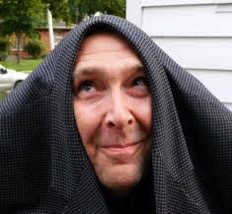
    (The photograph above shows poet and nonfiction writer Stephen Kuusisto posing as comedian Marty Feldman. Kuusisto has pulled his sport coat over the top of his head, thereby framing his face as if he’s wearing a dark cowl. His facial expression is that of an enthusiastic duffer or dunce. His eyes (blind) are exophthalmic. The real Marty Feldman was also visually impaired.)

    Disclaimer: I am not now nor have I ever been a member of the Inspiration Porn Party.

    No one who is disabled should be in doubt about the deleterious effects of inspiration. Who would want to be Tiny Tim? If Tiny Tim isn’t fresh in your mind, here’s the famous passage from “A Christmas Carol” in which Bob Cratchit and his wife discuss their crippled boy:

    “And how did little Tim behave?” asked Mrs Cratchit, when she had rallied Bob on his credulity and Bob had hugged his…

    View original post 1,514 more words

Emily K. Michael

Emily K. Michael is a blind poet, musician, and writing instructor. She serves as the poetry editor for Wordgathering at Syracuse University. She is also a poetry mentor in AWP’s Writer to Writer program. Her work focuses on music, embodiment, teaching, and ecology. Emily is passionate about birds, medieval history, singing, and guide dogs.

Pre-order My New Book

Purchase Neoteny

Email Subscription

Enter your email address to subscribe to On the Blink and receive new posts by email.

Watch my TEDx Talk!

What I’m Reading