• 25 Books in 2019

    It’s time for the annual book blog! In 2019, I read 25 books on my favorite topics: animals, relationships, language, and food. You’ll find my mini-reviews below each title. Books are linked to Amazon for convenience; these are not affiliate links.

    1. The Seven Principles for Making Marriage Work: A Practical Guide from the Country’s Foremost Relationship Expert by John Gottman PhD
      Dr. Gottman’s research is fascinating and easily applied to everyday relationships. This book was engaging and useful.
    2. Queen Victoria: Twenty-Four Days that Changed Her Life by Lucy Worsley
      In the style of Paula Byrne’s The Real Jane Austen, Lucy Worsley explores Queen Victoria through 24 memorable days in her life. While I enjoyed this book, it was not my favorite work by Worsley. However, as with Worsley’s other works, this book is meticulously researched and wide-ranging.
    3. The Enchanted Hour: The Miraculous Power of Reading Aloud in the Age of Distraction by Meghan Cox Gurdon
      This book could easily be my favorite for 2019. Meghan Cox Gurdon’s style is lyrical and scientific; she weaves stories with research to create a compelling case for reading aloud to children and adults alike.
    4. Reader, Come Home: The Reading Brain in a Digital World by Maryanne Wolf
      I can’t wait to build a writing course around this book. Wolf’s work is solidly crafted and grounded in research. Her style is not as accessible, but the concentration she demands will pay off.
    5. On Reading Well: Finding the Good Life through Great Books by Karen Swallow Prior
      Karen Swallow Prior never fails to disappoint. I’ve enjoyed her articles in The Atlantic, and I loved her biography of Hannah More. In this most recent book, she reads classic works of literature with a moral lens, inquiring what lessons each book teaches within its own universe.
    6. Dreyer’s English: An Utterly Correct Guide to Clarity and Style by Benjamin Dreyer
      This book should be called an “utterly delightful” guide. Dreyer is witty, precise, and coherent, and the book is a wonderful resource for writers, editors, and language-lovers.
    7. Mama’s Last Hug: Animal Emotions and What They Tell Us About Ourselves by Frans de Waal
      Get ready to laugh and cry. This is an extraordinary and empathetic treatment of animal emotions from primatologist Frans de Waal. The stories he shares are beautiful — and not as rare as some might imagine.
    8. Save Me the Plums: My Gourmet Memoir by Ruth Reichl
      This book was my first experience of Ruth Reichl’s writing, and it kept me up into the wee hours of the morning. Reichl’s voice is warm even as she embraces the elegant world of food journalism in New York City. I enjoyed this book so much that I read two more of Reichl’s books later in the year.
    9. Greek to Me: Adventures of the Comma Queen by Mary Norris
      After Between You & Me, the New Yorker‘s wrote a book exploring her love of all Greek things. I found this book to be uneven. Some chapters were fun and delightful, but others dragged or lagged. Her earlier work on grammar and style sparkles more than this Greek adventure.
    10. Garlic and Sapphires: The Secret Life of a Critic in Disguise by Ruth Reichl
      Another fabulous adventure from food critic Ruth Reichl, this book explores the different personas she adopted in order to do her job. This is a lively and entertaining book that invites readers to think about how clothes make the customer.
    11. The Unbearable Book Club for Unsinkable Girls by Julie Schumacher
      This is another hilarious novel from Julie Schumacher, who wrote Dear Committee Members and The Shakespeare Requirement. It’s definitely light reading, though not nearly as funny as her other books.
    12. A Life Beyond Reason: A Father’s Memoir by Chris Gabbard
      An exceptional book, this story is lyrical, realistic, and philosophical. Earlier this year I interviewed Chris Gabbard about the writing of this book. This book has my hearty recommendation!
    13. The Secret Wisdom of Nature: Trees, Animals, and the Extraordinary Balance of All Living Things by Peter Wohlleben
      As with so many other titles by authors I’ve read before, this book does not compare to Wohlleben’s earlier works. It’s interesting, yes, but it lacks the passion and poetry of The Hidden Life of Trees.
    14. You, Your Child, and School: Navigate Your Way to the Best Education by Sir Ken Robinson PhD
      Robinson comes back for a much more serious work about the pitfalls of modern education. As ever, he relies on solid research, storytelling, and accessible writing.
    15. Comfort Me with Apples: More Adventures at the Table by Ruth Reichl
      After loving two other books by Reichl this year, I was excited to read this one. But it is much more about romance than food, which I found disappointing. It’s clear that Reichl has developed her sharp style over time, and this book just cannot compare to her later work.
    16. Light His Fire: How to Keep Your Man Passionately and Hopelessly in Love with You by Ellen Kreidman
      Kreidman offers a lot of good advice here, especially about communication and not taking ourselves too seriously. But this book could be a lot shorter. I’d like to see more research and fewer lists of suggestions.
    17. Thank You For Arguing: What Aristotle, Lincoln, and Homer Simpson Can Teach Us About the Art of Persuasion by Jay Heinrichs
      I reviewed this book for use in my professional communication classes, and it is a complete delight! I listened to the audio and annotated the paperback, starring and tabbing something on almost every page. This book is witty, fun, and extremely well researched! It’s not just for language nerds either.
    18. Small Teaching: Everyday Lessons from the Science of Learning by James M. Lang
      This is a fantastic book full of practical advice. Lang says in the introduction that he wanted to create strategies that could be applied mid-semester, rather than a large-scale plan faculty could only adopt in between courses. He has succeeded with the principles and activities outlined in this book!
    19. The Ravenmaster: My Life with the Ravens at the Tower of London by Christopher Skaife
      I love books about ravens, and this latest one does not disappoint. Full of warm affection and descriptive anecdotes, Skaife’s writing is engaging and totally readable. I enjoyed the history and folklore he brought together in this book. I hated for it to end!
    20. The Art of Language Invention: From Horse-Lords to Dark Elves, the Words Behind World-Building by David J. Peterson
      Peterson is a conlanger, a creator of languages for fantasy and science fiction. But his book about inventing languages is a wonderful course in linguistics! His writing is lively and intelligent.
    21. How to Argue with a Cat: A Human’s Guide to the Art of Persuasion by Jay Heinrichs
      Heinrichs wrote this book in response to the many teachers who asked for a less intense version of Thank You For Arguing, and had I not read the former, I would love this one. But because I’ve read Heinrichs’ earlier and much more detailed work, I can only call this little volume cute and useful. It is a neat introduction to persuasion but it lacks the sparkle of Thank You For Arguing.
    22. Eat Cake. Be Brave by Melissa Radke
      Another candidate for “uneven.” I loved some chapters and slogged through others. I would say that 80% of this book is bright, witty, and warm, but there are definitely spots where it drags or preaches.
    23. The Queens of Animation: The Untold Story of the Women Who Transformed Disney and Made Cinematic History by Nathalia Holt
      As with Holt’s Rise of the Rocket Girls, this book is an interwoven story of several remarkable women. Holt shares the stories of artists who shaped animation as we know it today. She does not flinch away from the ugly truths of their lives, but neither does she surrender to sensationalism in telling these stories. This is a wonderful book that demonstrates a writer’s vision and control over her message.
    24. God’s Secretaries: The Making of the King James Bible by Adam Nicolson
      While this book provides a sharp cultural and social history, I would have liked more linguistic and etymological information. There are several beautiful and compelling passages here, but Nicolson spends a lot of time profiling the translators of the KJV rather than the book itself. This may be his attempt to get inside the minds of translators, but it felt a bit repetitive.
    25. Eat More Better: How to Make Every Bite More Delicious by Dan Pashman
      This is my idea of light reading, which I do not encounter nearly often enough! I knew I wanted to read this book because I love Dan Pashman’s podcast, The Sporkful. This book is hilarious, irreverent, and so so fun. From Pashman’s food-oriented interpretation of Yeats’ “The Second Coming” to his attempt at a Platonic dialogue about snack mix, this is a nerdy foray into eating culture.

    What did you read in 2019? What are you planning to read in 2020?

  • My interview at Bidwell Hollow

    I’m excited to share a recent interview I did for Bidwell Hollow, a literary newsletter celebrating authors and book events! In this interview, I talk about teaching, embodied poetry, and the meaning of “neoteny.” I appreciate the thoughtful questions and the chance to discuss my work!

    Read the full interview here.

  • NEOTENY on the way!

    I am excited to say that Neoteny: Poems is on its way to the printer! The book is also now available on Amazon! Click here to order.

    I had the pleasure of writing the long Amazon description for Neoteny, so here it is!

    A lively and imaginative debut, Neoteny explores blindness, family, and birdsong. In these poems, Emily K. Michael meditates on literary and personal heroes like Jo March, her beloved grandmother, and her guide dog. This collection is rich with treasures from childhood — the honey-colored piano Michael played, the fig tree in her front yard and the trays of fresh mint drying on her grandmother’s table. The poems move between a child mind and an adult’s perspective as Michael contemplates the rich emotional power of commonplace objects and the way her own blindness complicates everyday situations. Poems like “In This One” and “I Say Yes” take the reader into the domestic moments of young romance while “Deficiencies,” and “Wood Thrush” invite readers to disappear in wonder for the wild world.

    A native of Jacksonville, Florida, Michael weaves local sounds and spaces into her work. “Anniversary in St. Augustine” is the story of a couple’s private tour of historical landmarks, while “Ajeen” captures the quiet of a deserted street deep in hurricane season. “Trading Threes” and “Encore” welcomes local birds onto the page as Michael immortalizes the sounds of mockingbirds and cardinals.

    Though Neoteny is an uplifting collection, Michael confesses the difficulties she experiences as a blind poet in a sighted world. In “Small Hours,” she asks readers to wonder just how important their vision really is, and in “Blindness Locked Me Out,” she catalogues the situations where her disaiblity relegated her to the sidelines. “Natural Compliance” maps the challenge of exploring the wilderness with a white cane and wheelchair. And “A Phenomenology of Blindness” is Michael’s resounding answer to the common questions about how blindness works. To those who think Michael is seeking a cure, she offers “Faith,” a poem that examines how healing really works.

    Neoteny also pays tribute to the poets Michael loves. “Practice” is Michael’s nod to CD Wright’s “Lake Echo, Dear” and “Antiphon for Emily” is her song for Emily Dickinson. Neoteny opens on “I Begin to Understand Jo March,” a finalist for the 2018 Atlantis Award. The final poem is “Cello,” first published in Artemis Journal and later included in Carilion Roanoke Memorial Hospital’s Poems in the Waiting Room. Poems from this collection have also appeared in Wordgathering, Nine Mile Magazine, The Fem, Saw Palm, The Deaf Poets Society, Rogue Agent, and The South Carolina Review.

    Get your copy today!

  • NEOTENY Gets Nominated!

    I have some very exciting news!

    Yesterday I found out that my publisher, Finishing Line Press, nominated Neoteny: Poems for The Pushcart Prize! This prize is specifically for the literary work of small presses, and each press may put forward six nominees for the year. I am one of five nominations from Finishing Line!

    Finishing Line’s announcement for this year’s Pushcart nominees

    I am so honored to be nominated alongside these worthy authors. I can’t wait to see who wins!

    Have you ordered your copy of Neoteny yet? The book will be in the mail in just a few weeks!

  • Read my profile in the Resident Community News

    I sat down with Karen Rieley of the Resident Community News for a conversation about disability, family, and education. We talked about the importance of mentors and the value of passing along we learn. Read the full story here.

  • The Seven Gifts: What Poetry Offers Prose Writers  

    Today BREVITY’s Nonfiction Blog features my essay, “The Seven Gifts: What Poetry Offers Prose Writers.” Enjoy!

    Guest Blogger's avatarThe Brevity Blog

    Emily_Portraits-9By Emily K. Michael

    As a writing teacher, I spend more time defending poetry than prose. When I tell my students, “We’ll be doing poetry today,” I hear groans and sighs. And when I share that I write poetry, people say, ‘I always had trouble with poetry.” Or even, “I never really liked poetry.” Only the occasional bright-eyed student preempts the discussion by asking, “Are we writing any poetry this year?”

    I’ve never heard people react to prose in the same way. While most students don’t rush to write essays, they also don’t reflexively jerk away from prose. I’d like to navigate this reticence, to lead essayists and memoirists to the unruly garden where poetry writers wander.

    Why should you take this walk with me, the avid poet? Because you’ll hear the black-capped chickadees and chimney swifts, smell the lavender and sage, find the world blooming and decaying all at…

    View original post 927 more words

  • My feature on River City Live

    A few weeks ago I was interviewed by Rance Adams of WJXT’s River City Live, and I am so excited to share the feature. Rance asked insightful and empathetic questions, and he created a wonderful segment about my work, even including clips from my TEDx presentation and JaxbyJax readings. The feature aired today at 11AM.

    Watch my interview here. This is my favorite TV spot thus far! I got to talk about Neoteny: Poems, the importance of accessible poetry, and the emotional transformation that poetry creates. I hope you enjoy it!

  • 5 Facts about Guide Dogs

    5 Facts about Guide Dogs

    Recently I wrote a short post for social media that included five facts about guide dogs. I wanted to share these facts as responses to common misconceptions that people have. People often ask me, “Does your dog EVER get to play?” or “What is he like when the harness comes off?” I did not expect the post to be a big deal. I did not expect it to be liked over 550 times and shared over 600 times!

    So I decided to expand the post with some stories and pictures. My current guide dog York is my first, and we have been working together for five years. York comes from Southeastern Guide Dogs in Palmetto, Florida, where he was the final pup in a litter of eight. Six of his siblings have gone on to guide work and other professions, so he is from a very career-oriented family.

    Here we are being photogenic during our month-long training at Southeastern.

    Emily & York at Southeastern Guide Dogs.
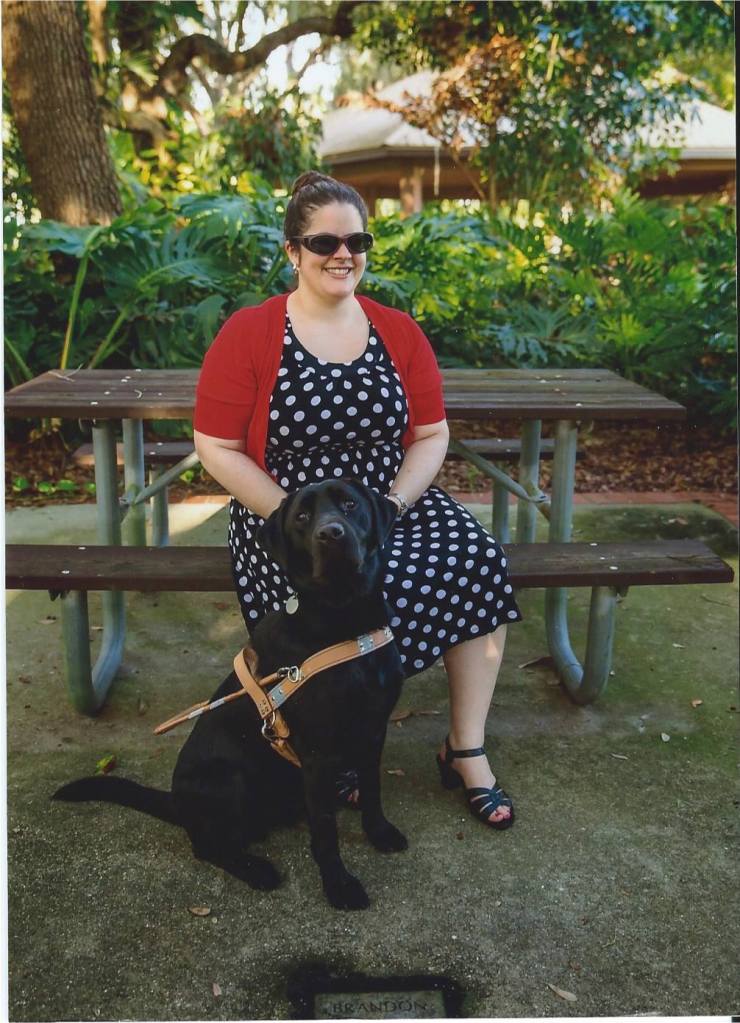
    Emily and guide York at Southeastern Guide Dogs, 2014.

    York is my best friend, an adventurous, capable partner. He loves weaving through crowds and obstacles, and he hates working in the rain. I hope the information below help you to learn about us — and about all the other dedicated guide dog teams working in the world.

    Guide dogs don’t watch traffic signals. They wait on their blind handler to give a forward command.

    A guide dog is not a GPS; the blind handler needs to know where she is and reroute herself if she gets disoriented. To qualify for a guide dog, a blind handler must undergo interviews, health checkups, and mobility evaluations. A trainer once told me that 80% of applicants at her school were denied because their mobility skills were not where they needed to be.

    When preparing to cross a street, the handler listens to traffic patterns and makes an educated judgment about the best time to move forward. If the guide dog perceives a threat, such as an obstacle or oncoming car, the dog exercises Intelligent Disobedience: the ability to ignore a handler’s command in order to keep the team safe. When I was in training with York, I told him to cross a street — only to feel him give a firm, no-nonsense stop. He put on the brakes, and I felt the wind of a passing car on my face. It was a car I had not heard, a car the trainers had chosen precisely for its silence. Without a dog, I would’ve been in the street relying on the goodwill of a driver. With York, I was safely on the curb, trying to catch my breath. And he was completely unphased.

    Petting distracts guide dogs from their work. When a guide dog is in harness, his whole focus should be on his handler.

    Many people know the “no petting” rule, but they don’t get why it exists. Dog lovers see this rule as a cruel restriction. Dogs love to be petted and dog lovers love to pet. But if you’re petting the dog or calling his name, you’re taking his attention away from his handler and making his job harder. 

    Imagine that you or someone you love is undergoing surgery. Would you want the nurses and assistants to flirt with the surgeon? Tickle her as she reaches for instruments? Tell her long, involved stories while she attempts to perform a complicated procedure? Would you want people to accost her right before she steps into the O.R. so that she loses her focus?

    Like the surgeon, a guide dog saves lives. Distracting my dog means that he might miss our turn or rush forward. Guide dogs are pros, so it is not easy to distract them. But it is not kind or considerate to reach for them and use puppy talk. When you do these things, you’re effectively saying that your need to pet a dog is more important than my safety.

    York remains focused as we walk a route on Puppy Raiser Day.

    Even though I work with a guide dog and understand the rules, I still feel the instinctive urge to reach out for fluffy passersby, whether they are working or not. So you are not alone in your desire to pet my dog. I feel the same desire every time I meet a working dog. We all must be strong together!

    Guide dogs get lots of play time out of harness.

    When you see a guide dog in public, he’s working. But handlers give their dogs plenty of toys, love, massages, and running time. York loves to run in the backyard, gallop around the house, chew on bones, and cuddle. In training, we were taught how to massage our pups to help them relax and make sure they feel good. And even bathtime and grooming are peaceful bonding times for us.

    A guide dog behaves differently when he’s working in harness.

    You will often see a totally different dog in and out of harness. The harness also comes off for food, water, and potty breaks. When York’s harness comes off, he usually rolls on the floor or leaps in the air. When I slide it on, his whole body stands to attention. If he sees me pick up his harness, he usually runs to his favorite rug and sits patiently, tail wagging.

    From puppyhood, guide dogs have been trained to understand that harness time is work time. Guide dog puppies start their training in a “puppy cape” which is like a pre-harness (think “training wheels”). In the cape, they can be petted by strangers and do everything a puppy wants to do. When they are a little older, they graduate to a “puppy coat”: in the coat, they can’t eat, be petted, or do their business. The coat prepares the pup for harness time, when he will need to put his handler’s safety before a delicious apple core lying in the grass.

    But just as York focuses on my safety while in harness, I focus on his needs whether the harness is on or not. I watch his body language to see when he needs a break, and I keep his meals on a strict schedule. I never want him to feel distressed when he’s working, so sometimes we step over to the grass for a quick break.

    Guide dogs enjoy their work.

    You cannot force a dog to guide a handler, especially not a Labrador. The dog has to decide that this handler is worth guiding. When you show a dog his harness, he often gets excited. Similarly, when a dog is ready to retire, he lets his handler know – either by showing signs of stress while working or by being reluctant to work.

    If a dog does not love guide work, he does not become a guide dog. Each training program has their own assessments for the dog’s skills, temperament, and health. Guide dog training is designed to make sure that the pups with the right attitude and aptitude work toward a handler. Some dogs don’t pass the initial tests, and some dogs decide midway through “school” that they are no longer interested. Some dogs even graduate from training with a handler and then decide that this isn’t the job for them.

    A skilled trainer or puppy raiser can look at a young dog and spot the signs of a guide in the making. They’re looking for confidence, curiosity, empathy, and intelligence. A guide dog is a leader who isn’t afraid of sudden sounds or unforeseen obstacles. I know without a doubt that my dog is far more adventurous than I am!

    Emily and York at UNF, 2019. Photo by Chelsea Whiteman.

    I am so honored to work beside York. He returns my love and teaches me to be bold. He is the product of a network of trainers, puppy raisers, sponsors, and furry friends. And he is a wonderful, wonderful companion!

    The bond between a guide dog and handler is an intense stretching of the heart. Please respect our bond and our need to travel safely.

  • My spot on First Coast Connect

    This morning I spoke with Charleen Shirk on WJCT’s First Coast Connect. We talked about Neoteny: Poems, the importance of mentorship, and cultivating a poet’s awareness. I explained that disability alone is not an angle or a superpower: it is a cultural identity.

    Listen to the full interview here. My segment starts around 35:30. You can also catch the replay tonight at 8PM on 89.9 FM.

  • Experiences of Disability Issue Open for Submissions

    This is an exciting call for disabled writers! Flash essays of 750 words or less due by March 1.

    Dinty W. Moore's avatarThe Brevity Blog

    disability editorsSubmissions are now being accepted for Brevity’s upcoming special issue, “Experiences of Disability,” to be published in September 2020.  You can submit your flash essays here.

    For this issue, we invite brief nonfiction submissions (750 words or fewer) that consider all aspects of illness and disability: what it is, what it means, how our understanding of disability is changing. We want essays that explore how disability is learned during childhood, lived over the entire course of a life, and how our changing understanding of disability shapes the way we experience ourselves and others. We are looking for flash essays that explore the lived experience of illness and disability, as well as encounters with ableism, and that show readers a new way to understand the familiar or give voice to underrepresented experiences.

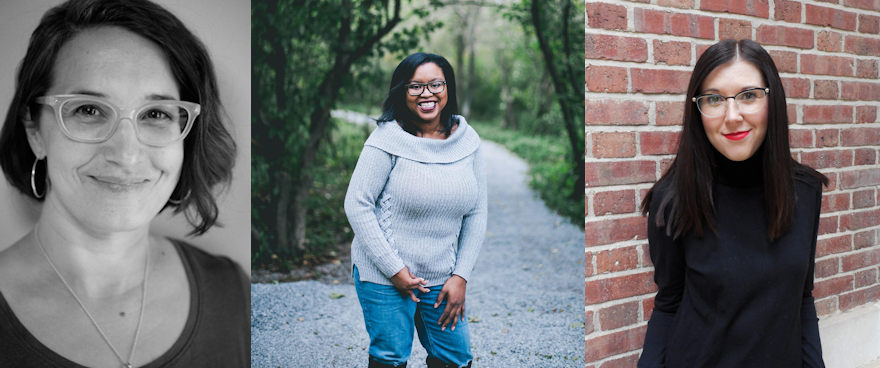
    The “Experiences of Disability” issue will be guest edited by Sonya Huber, Keah Brown, and Sarah Fawn Montgomery (shown…

    View original post 238 more words

  • Nine poems in Nine Mile!

    I’m thrilled to announce that nine of my poems are included in the Fall 2019 issue of Nine Mile Magazine! This special double issue was guest-edited by Diane Wiener, and it features the work of disabled, D/deaf, and neurodivergent poets.

    Cover of Fall 2019 Nine Mile Magazine

    My poems in this issue are “Faith,” “A Phenomenology of Blindness,” “Ajeen,” “Patronage,” “Anniversary in St. Augustine,” “I Bless Our Daughter,” “Practice,” “Inside Jokes,” and “Strangers at the Coffeeshop.” Six of these will appear in Neoteny: Poems.

    Table of contents featuring Emily K. Michael's 9 poems

    Click here to order your copy!

  • Fixed vs. Growth Mindset: Accessibility

    Dr. Carol Dweck’s research on fixed and growth mindsets applies to accessibility. A fixed mindset is when someone assumes that a situation cannot be changed or improved while a growth mindset moves forward with the belief that a situation can be improved.

    So if I am in a meeting and someone hands me a document in 12-pt font, I will say, “I can’t read this.” This sounds like a fixed-mindset statement. I use it here because I’ve already informed the meeting coordinator of my need for 18-pt font or a digital copy of the reading material. So if they have not provided these ahead of time, there is not much I can do. I’ve tried various handheld technologies on printed texts, but they slow my reading way down.

    However, I never look at a webpage on my computer and just say, “I can’t read this.” I immediately start flipping switches, inverting colors, highlighting text, or activating a text-to-speech app to have the text read aloud. If these measures don’t work, I reach out to the website moderator.

    Accessibility fails when people assume that it’s not their responsibility, and this applies to the disabled person as well as the nondisabled person providing content. If the nondisabled person says, “Hey, it’s not my problem. Figure it out yourself,” then the person who requires large print, an interpreter, or braille or a ramp has to struggle. This is especially difficult in real time, when the disabled person needs access to something immediately, something everyone else in the room can access easily.

    But if the disabled person comes in and says, “I can’t read that” or “I can’t hear that” or “I can’t walk that far,” without any attempt to help the other person come up with a solution, nothing productive can occur.

    Accessibility has to be a dialogue between all parties or else it will never happen. There is no room for martyrs or heroes. It can be exhausting to repeatedly have the same discussions about font sizes and wider pathways, especially if the other side doesn’t seem to be listening. But pouting and grumbling won’t solve the problem. Neither will “tough love” solve the problem. No amount of “tough love” and “powering through” makes me able to read small fonts. No amount of powering through will make an amputee’s leg grow back.

    Disabilities rarely go away. For most of us, they are something we deal with on a daily basis. We need to choose a sustainable course of patience and collaboration. We’re all here to stay and we have to find a way to work together.

  • Guest on Scribbler’s Corner at River of Grass

    This weekend, I was thrilled to be a guest on Scribbler’s Corner at River of Grass, a local podcast featuring interviews with Florida writers. My hosts, Darlyn Finch Kuhn and Brad Kuhn, welcomed me into their home studio for a warm and engaging conversation about writing, mentorship, and the habits of a creative life. We talked for an hour, but the time flew by! Darlyn asked such insightful questions and made it so easy for me to talk about my work, loves, and motivations.

    You can listen to our conversation here. You can also find the podcast on iTunes or Stitcher and hear all Darlyn’s other chats with local writers.

  • My work in the latest Wordgathering

    The September issue of Wordgathering: A Journal of Disability Poetry and Literature is live! This is a very special issue for all of us who have worked on Wordgathering over the years: the last issue edited by our kind and capable Michael Northen.

    In 2013, my first published poems appeared in Wordgathering. Since then, Mike has invited me to contribute, review, and edit for the journal.
    Our forthcoming issues will be backed by Syracuse University, so this September issue is a really special one. Mike invited former Wordgathering authors to contribute, and I am proud to be listed alongside Stephen Kuusisto, Jill Khoury, John Lee Clark, Ona Gritz, Jillian Weise, Dan Simpson, and so many other talented writers in the disability community. This issue has our largest gathering of poetry and eleven book reviews.

    You’ll find my work in the Poetry, Interviews, Book Reviews, and Art sections — as well as Mike’s heartfelt acknowledgement on the cover page. In the Poetry section, I contributed three poems: “Cello,” “Inside Jokes,” and “Lingua Franca.” Both “Cello” and “Inside Jokes” have been previously published elsewhere and are forthcoming in Neoteny: Poems, but “Lingua Franca” is a brand new poem! All audios were recorded by me.

    In the Interviews section, Mike wanted to run my On the Blink interview with Chris Gabbard. You can read the Wordgathering version here. Mike has always kept up with my writing, and has often asked me to republish blogs in Wordgathering. For a young writer, this kind of encouragement is such a delight!

    The Book Reviews section, which covers eleven books, contains my review of Kathi Wolfe’s Love and Kumquats: New and Selected Poems. You’ll find some of Kathi’s poems in the Poetry section, too!

    And the Art section contains my interview with Tim Lawrence, a Jacksonville artist and sculptor. Tim went to Hollywood to work on film sets and came back with all kinds of wonderful techniques for creating accessible art!

    This is a powerful issue, and I am so honored to contribute as an editor, author, and poet.

  • Catch me on The Morning Show

    Today I talked about Neoteny: Poems on News4Jax’s Morning Show. I got to discuss my love of teaching and the process of writing a book. Here’s the video.

    Thank you to everyone who has ordered a copy of my book – and to all who have liked and shared my posts! I am so encouraged by the warm reception I’ve received, and I can’t wait till you’re able to read my work from start to finish!

    Have you ordered a copy of Neoteny: Poems? All pre-orders that come in before September 20 help me generate a larger pressrun for the book. You can still pre-order after this date, but the numbers after my advance sales won’t change my pressrun. So click here to get your copy today!

    And if you can’t wait till Neoteny Release Day in November, don’t worry! I have more poems coming out in journals this month! I’ll share links when they are published.

Emily K. Michael

Emily K. Michael is a blind poet, musician, and writing instructor. She serves as the poetry editor for Wordgathering at Syracuse University. She is also a poetry mentor in AWP’s Writer to Writer program. Her work focuses on music, embodiment, teaching, and ecology. Emily is passionate about birds, medieval history, singing, and guide dogs.

Pre-order My New Book

Purchase Neoteny

Email Subscription

Enter your email address to subscribe to On the Blink and receive new posts by email.

Watch my TEDx Talk!

What I’m Reading